New
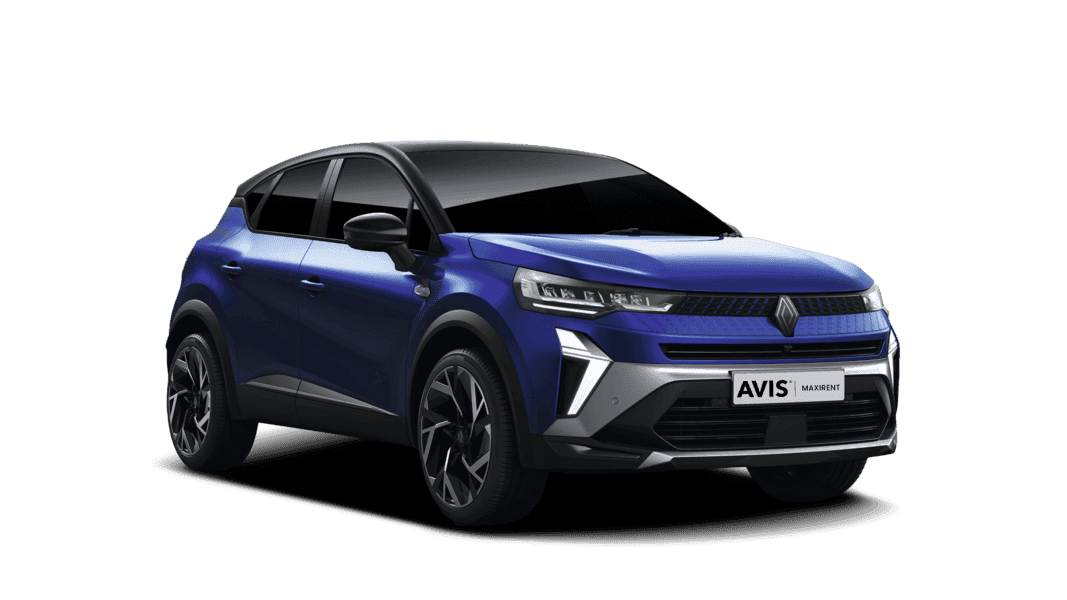
Renault
Captur Esprit Alpine full hybrid E-Tech 160
List price 32850 € incl. VAT- Esprit AlpineEquipment level
- manualTransmission
- petrolFuel
- 160 hpPower
- new vehicleVehicle age
- 5 placesSeats
From
excluding VAT€268.00
The car in the company fleet is no longer just a means of transport. It has become a strategic tool for efficiency, cash flow and company image.
The year 2025 brings major changes in legislation, VAT and the approach to mobility. Many companies today are faced with the question: is it more profitable to own vehicles or to lease them?
This article will show you how the economics of corporate mobility have changed, what the trends are and why operating rental or leasing from AVIS makes sense from an investment perspective.
As of 1 January 2026, VAT deductions for mixed car use will be cut to 50% under approved legislation, which fundamentally affects corporate costs.
Rising maintenance, insurance and petrol prices mean that the total cost of ownership (TCO) of an internal combustion vehicle has risen by 12% year-on-year.
Companies are therefore reassessing whether it is worth tying up capital in assets that are rapidly losing value.
Mobility is becoming a service, not an asset.
Instead of ownership, flexible vehicle leasing is preferred to respond to seasonal fluctuations or changes in staff numbers.
Thanks to platforms such as AVIS MaxiRent or AVIS Lease, companies can change vehicles as and when they need them without burdening the accounting system.
| Criterion | Rental / Operating Lease | Vehicle ownership |
|---|---|---|
| Capital Burden | None, monthly lease paid | High - purchase or loan |
| VAT and accounting | VAT deduction on an ongoing basis | Depreciation over 4 years |
| Servicing, insurance, tyre service | Included in rent | To be dealt with individually |
| Residual value risk | Landlord (AVIS) | To be borne by the company |
| Flexibility | Possibility to change vehicles after 6-12 months | Fixed asset - more difficult to replace |
| Cash-flow effect | Stable, predictable | Significant upfront expenditure |
| Tax deductibility | Monthly rent as an expense | Depreciation + operating costs |
📊 C onclusion of the table:
Leasing brings lower risk, better liquidity and full cost predictability.
Ownership only makes sense if the company needs long-term specialty vehicles (e.g. with modifications).
According to AVIS Lease data and ACEA statistics:
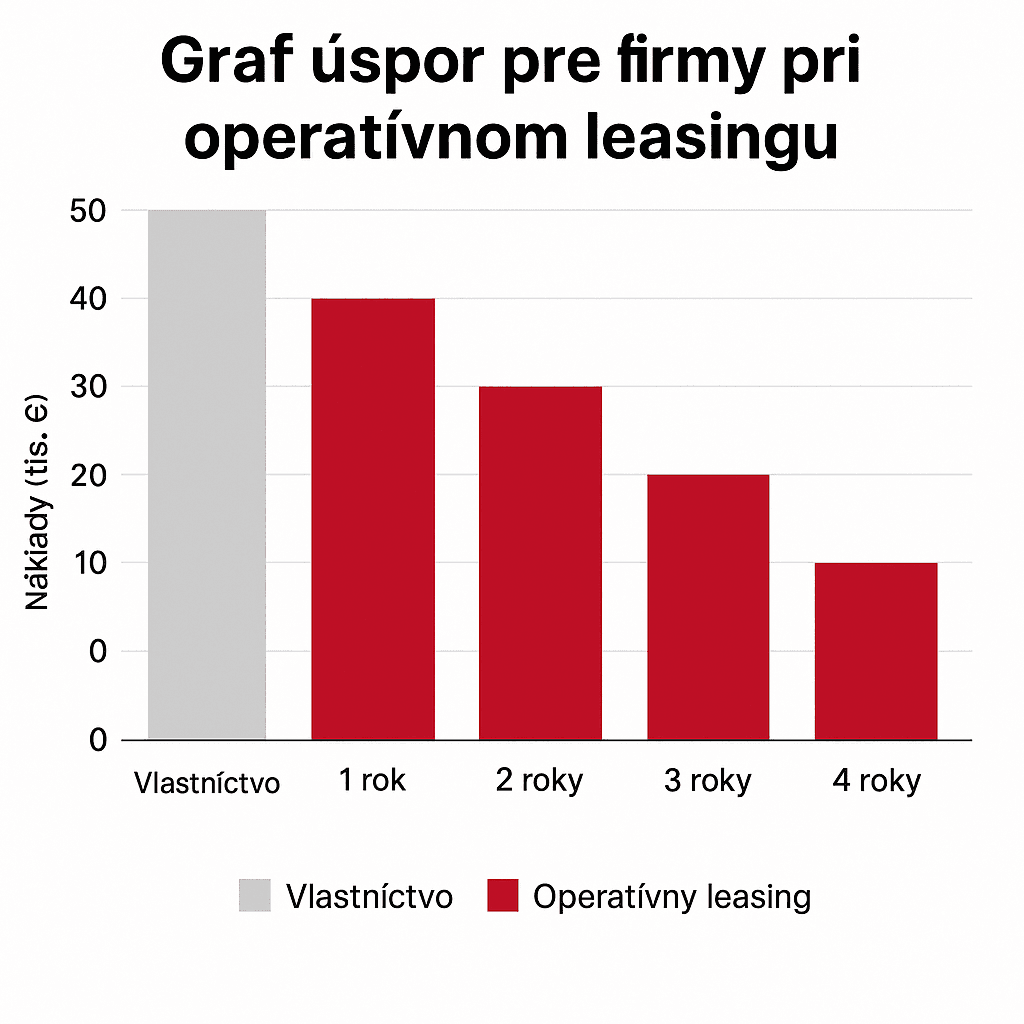
The average annual cost of a company vehicle in 2025 is:
€10,800 for ownership (depreciation, insurance, servicing, petrol)
€8,400 for operating lease or rental
Savings of 20-25% mean a difference of up to €24,000 per year for a fleet of 10.
In addition, companies do not have tied up resources in assets and can use them for business development.
Demand is growing for short-term contracts (6-24 months).
AVIS MaxiRent allows you to have a new car with no commitment both long and short term.
ESG reporting motivates companies to switch to electric and hybrid vehicles.
AVIS leases can combine electric cars with conventional cars in one fleet.
Thanks to AVIS applications or platforms such as CAMASYS, a company has a real-time overview of journeys, refuelling and servicing.
This reduces administration and the risk of errors.
Assess the real need for mobility.
If vehicles are not used to at least 70% of capacity, renting is preferable.
Consider the impact on cash flow.
Leasing spreads costs evenly over the period.
Keep an eye on VAT legislation.
From 2026 onwards, leasing will be even more attractive from a VAT perspective than buying.
Allow for rapid moral wear and tear on cars.
Electronics and new emission standards shorten the life of models.
Include indirect costs in the calculation - e.g. administration time, servicing, insurance claims.
Fleet: 15 vehicles (previously purchased, now leased through AVIS Lease)
Term: 36 months
Comparison:
| Item | Previously (ownership) | Now (AVIS MaxiRent) |
|---|---|---|
| Purchase price | 315 000 € | 0 € |
| Monthly cost | 8 500 € | 6 200 € |
| Number of complaints | 12 per year | 3 per year |
| Saving administration time | - | 40 hours/month |
👉 The company saved €2,300 per month and gained the possibility to renew the vehicles after 3 years without residual value risk.
When they don't want to tie up capital in an asset and prefer flexibility or lower service risk.
Yes, in the case of 100% business use. From 2026, a 50% deduction will apply for mixed use.
Yes, AVIS also offers rentals for vans and vans via the avisvan.sk platform .
Leases are generally for 2-5 years, whereas AVIS MaxiRent long term leases can be from 2 months to 2 years with no commitment.
Under AVIS Lease after the contract expires, with MaxiRent even as needed - even several times a year.
Leasing cars brings lower risk and better cost control.
Vehicle ownership puts a strain on cash flow and administration.
From 2026, VAT deduction will be more favourable for rental.
AVIS provides a complete 'car as a service' solution - with no upfront costs.
For businesses, this is a 20-25% saving per year and flexibility with no strings attached.
The year 2025 is an ideal time to rethink corporate mobility.
While ownership means tied-up capital and uncertainty, leasing brings freedom, savings and predictability.
AVIS offers companies a tailored solution - from a two-month lease to a full-service, long-term operating lease.
👉 Find out how much you can save on company cars:
👉 Book your vehicle today at www.avismaxirent.sk/
Contact:
Email: info@avismaxirent.sk
Phone: +421 2 2030 2100 / +421 903 821 628
Address: AVIS Maxirent, United Mobility Centrum, Stará Vajnorská 39/A