
What are the differences between long-term car leases for a self-employed individual (SZČO) and a limited liability company (s.r.o.) in terms of tax expenses, VAT deductions, and the approval process?
If you run a business, sooner or later you’ll have to address the issue of a company vehicle. Many business owners face the decision of whether it’s more cost-effective to buy a car, finance it through a lease, or rent it on a long-term basis. At the same time, they’re interested in the differences between a sole proprietor (SZČO) and a limited liability company (s.r.o.) in terms of tax expenses, VAT deductions, and financing approval.
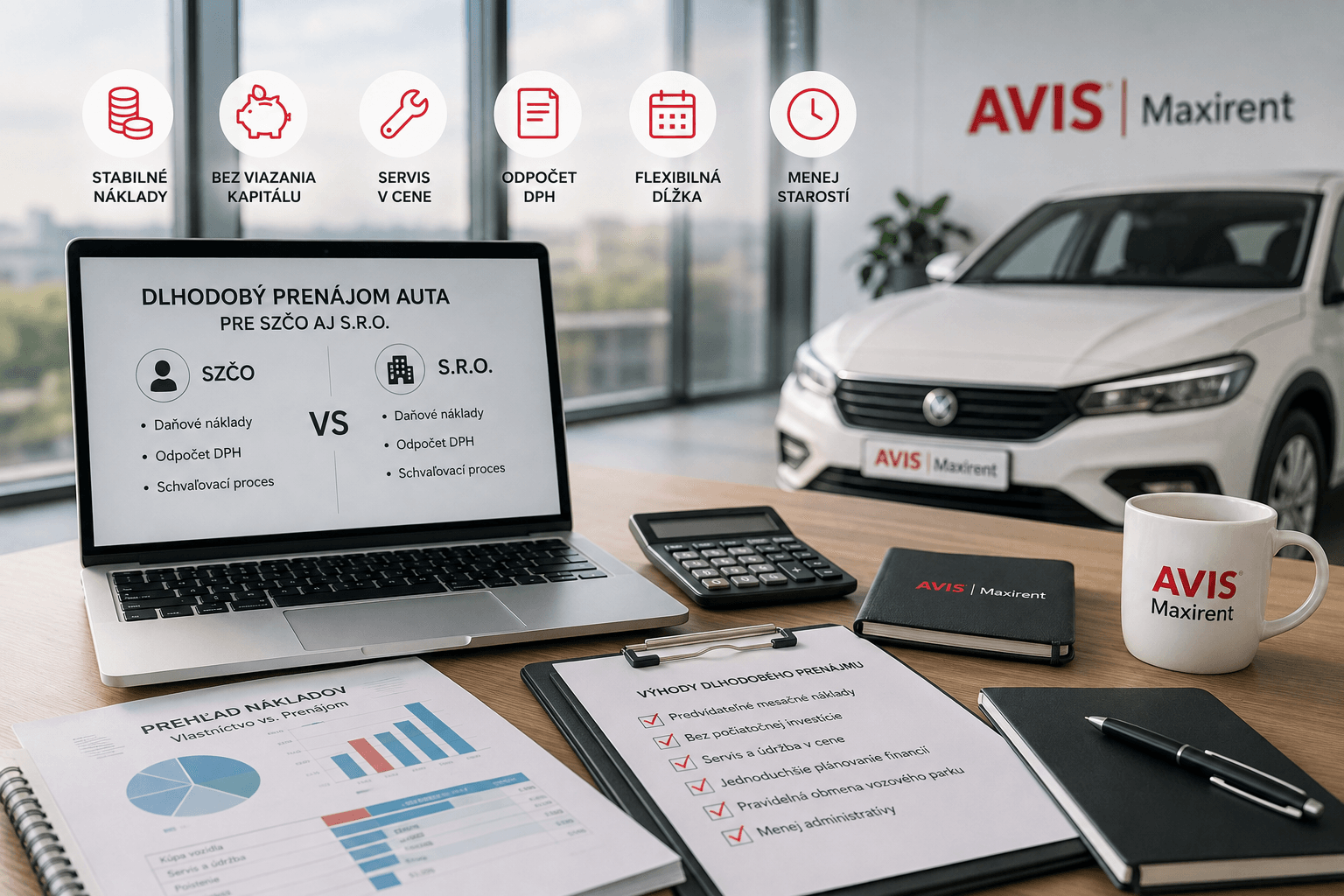
Long-term car leasing has become a popular alternative in recent years, mainly because entrepreneurs do not have to tie up capital in the purchase of a vehicle and, at the same time, they have predictable monthly costs without unexpected expenses for maintenance or repairs. Other advantages include simpler administration and better cash flow planning.
If you’re considering a solution for your business, it’s worth understanding the differences between a self-employed individual (SZČO) and a limited liability company (s.r.o.) so you can choose the model that’s most advantageous both financially and administratively. Modern solutions, such as those offered by Avis Maxirent, allow you to tailor your lease to your business needs without unnecessary complications.
Why are entrepreneurs increasingly opting for long-term car leases?
Vehicle ownership is no longer the only option. Many companies and self-employed individuals today prefer long-term car leases because they offer several practical benefits.
The most common reasons are:
- predictable monthly costs,
- no high initial investment,
- service and maintenance are often included in the lease,
- easier financial planning,
- regular fleet renewal,
- less paperwork.
When leasing, a business owner uses the vehicle for business purposes without having to worry about its future resale or depreciation.
Long-Term Car Lease for Self-Employed Individuals (SZČO)
Tax Expenses

For a self-employed individual, monthly lease payments for a vehicle generally constitute operating expenses, provided the vehicle is used for business purposes and the conditions set forth in applicable tax regulations are met.
The advantage is that the business owner does not have to make a large one-time investment to purchase a car and can spread the costs over the entire lease term.
VAT Deduction
If a self-employed individual is a VAT payer and uses the vehicle for taxable business activities, they may, subject to meeting the legal requirements, claim a VAT deduction in an amount proportional to the business use of the vehicle.
In cases of combined personal and business use, the rules of the VAT Act must be followed, and the deducted tax must be adjusted accordingly.
Approval of Leasing
The approval process for self-employed individuals depends primarily on:
- the length of time in business,
- the amount of income,
- tax return,
- any outstanding liabilities,
- the entrepreneur’s creditworthiness.
New business owners may sometimes face different terms than those with a longer business history.
Long-Term Car Leasing for a Limited Liability Company
Limited liability companies often use long-term leases as part of effective corporate financial management.
Tax Deductions
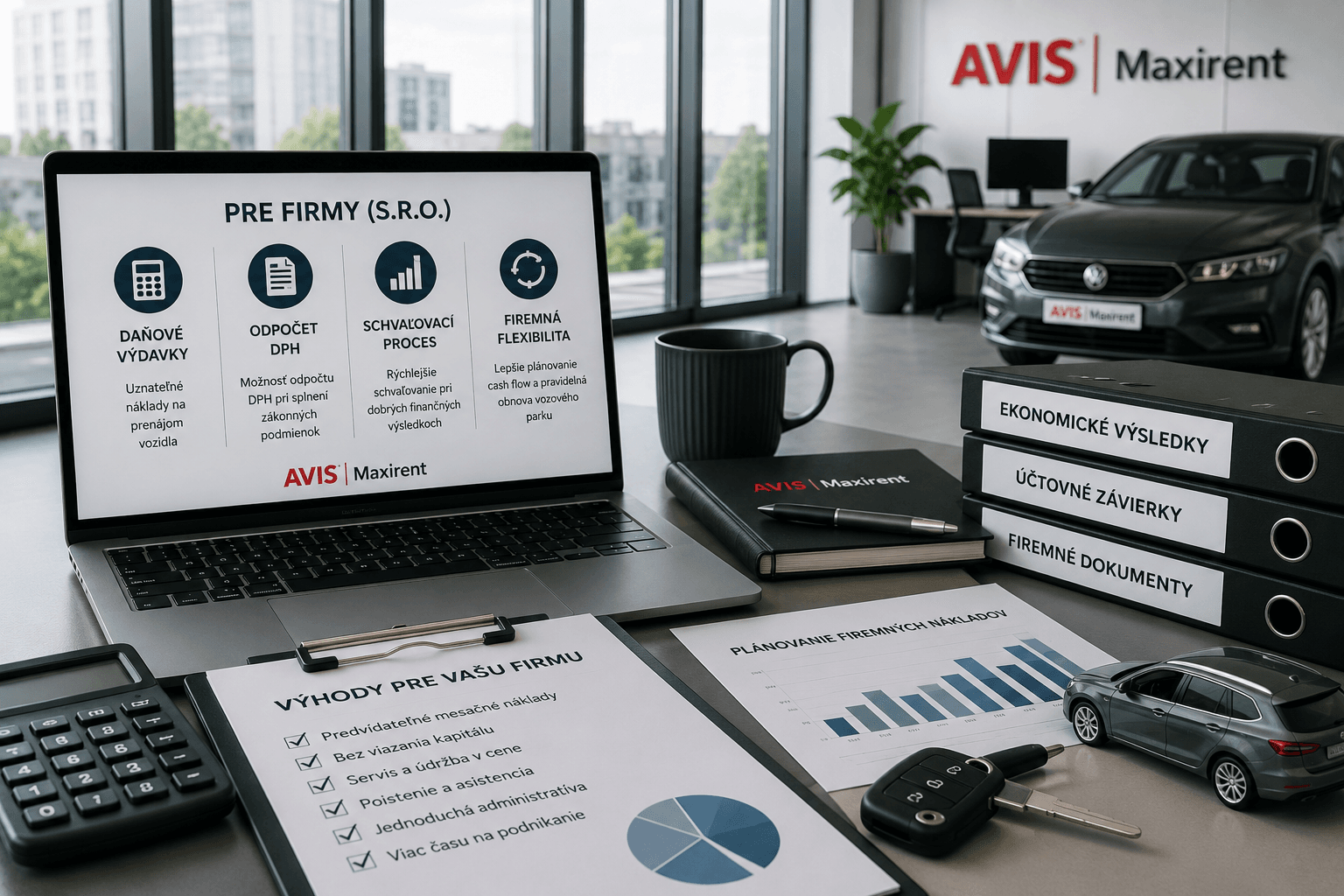
Monthly vehicle lease costs may qualify as tax-deductible expenses if the conditions under applicable law are met and the vehicle is used for business purposes.
A major advantage is the even distribution of costs over the entire lease term.
VAT Deduction
A VAT payer may, under conditions specified by law, claim a VAT deduction on vehicle lease payments to the extent the vehicle is used for business purposes.
The rules regarding the mixed use of a vehicle for business and personal purposes also apply to limited liability companies (s.r.o.).
Approval Process
The following are primarily assessed:
- the company’s financial results,
- financial statements,
- business history,
- the company’s financial health,
- any outstanding obligations to the government or banks.
Well-managed companies can go through the approval process very quickly.
Self-employed individual or limited liability company (s.r.o.)—what are the main differences?
When making a decision, it’s best to consider several factors at once.
The biggest differences lie primarily in:
- creditworthiness assessment,
- the documents submitted,
- accounting,
- taxation methods,
- administrative processes.
The basic principle of long-term leasing remains the same; the main difference lies in the documents the business owner provides during the approval process and how they account for individual expenses.
What is the most common mistake entrepreneurs make?
Many business owners base their decisions solely on the amount of the monthly payment.
In practice, however, they should compare the total costs of operating the vehicle.
For example, the following should be taken into account:
- maintenance,
- regular inspections,
- tires,
- administration,
- insurance,
- depreciation of the vehicle,
- time spent dealing with repairs.
These items alone often amount to thousands of euros over the course of several years of vehicle use.
When is a long-term car lease a good idea?
Long-term car leasing is particularly suitable for business owners who:
- want stable monthly costs,
- do not want to tie up their own capital,
- prefer new vehicles,
- need a reliable car for their day-to-day business,
- don’t want to deal with servicing or selling the vehicle at the end of the lease.
That’s why more and more self-employed individuals and companies are turning to Avis Maxirent services, which allow them to flexibly set the lease term according to their business needs and obtain a vehicle without an unnecessarily complicated process.
How do you choose the right solution?
There is no one-size-fits-all solution for every business owner.
When making your choice, consider:
- the number of kilometers driven,
- the planned duration of car use,
- the need to replace the vehicle,
- your monthly budget,
- tax implications,
- administrative burden.
If you expect your business to grow or plan to regularly renew your fleet, long-term leasing may be a more efficient solution than vehicle ownership.
Conclusion
The difference between long-term car leasing for self-employed individuals and limited liability companies (s.r.o.) isn’t just about accounting or VAT deductions. The approval process, the entrepreneur’s financial history, and the overall business strategy also play a significant role.
With a properly structured lease, the entrepreneur gains greater financial flexibility, better cost planning, and fewer worries about vehicle operation. If you’re looking for a reliable solution for your business, Avis Maxirent offers long-term vehicle leases that can be tailored to the needs of both sole proprietors and companies, helping businesses focus on what matters most—growing their business.
FAQ
Can a sole proprietor claim car rental expenses as a business expense?
Yes, provided the conditions under applicable tax regulations are met and the vehicle is used for business purposes.
Can a self-employed person deduct VAT on a car lease?
A VAT payer may claim a VAT deduction to the extent of the vehicle’s business use, provided the legal conditions are met.
Is it easier for a limited liability company (s.r.o.) to get approval for a lease?
It depends on the company’s creditworthiness, business history, and financial results. Each application is assessed on a case-by-case basis.
Is a long-term lease more advantageous than buying a car?
In many cases, yes—especially if the business owner prefers stable monthly costs, doesn’t want to tie up capital, and wants to minimize administrative work.
Is long-term leasing also suitable for small business owners?
Yes. It’s used by sole proprietors, startups, and larger companies that want predictable mobility costs.
TL;DR
- Long-term car leasing is suitable for both self-employed individuals and limited liability companies (s.r.o.).
- The main differences lie in approval and accounting procedures.
- VAT payers can claim a VAT deduction if they meet the legal requirements.
- Leasing provides stable monthly costs and less paperwork.
- Before making a decision, it’s a good idea to compare the total costs, not just the monthly payment amount.
- Avis Maxirent offers a flexible long-term lease solution for entrepreneurs and businesses alike.