
Integration of the fleet into the company's IT system
Home
The integration of the fleet into the company IT system is one of the most effective steps of modern fleet management. Companies today need accurate data, fast decision-making and process automation that reduce costs and risks. This article explains how fleet digitalization is taking place, what solutions exist, what technology trends are current in Europe, and what concrete benefits integration brings to the practice.
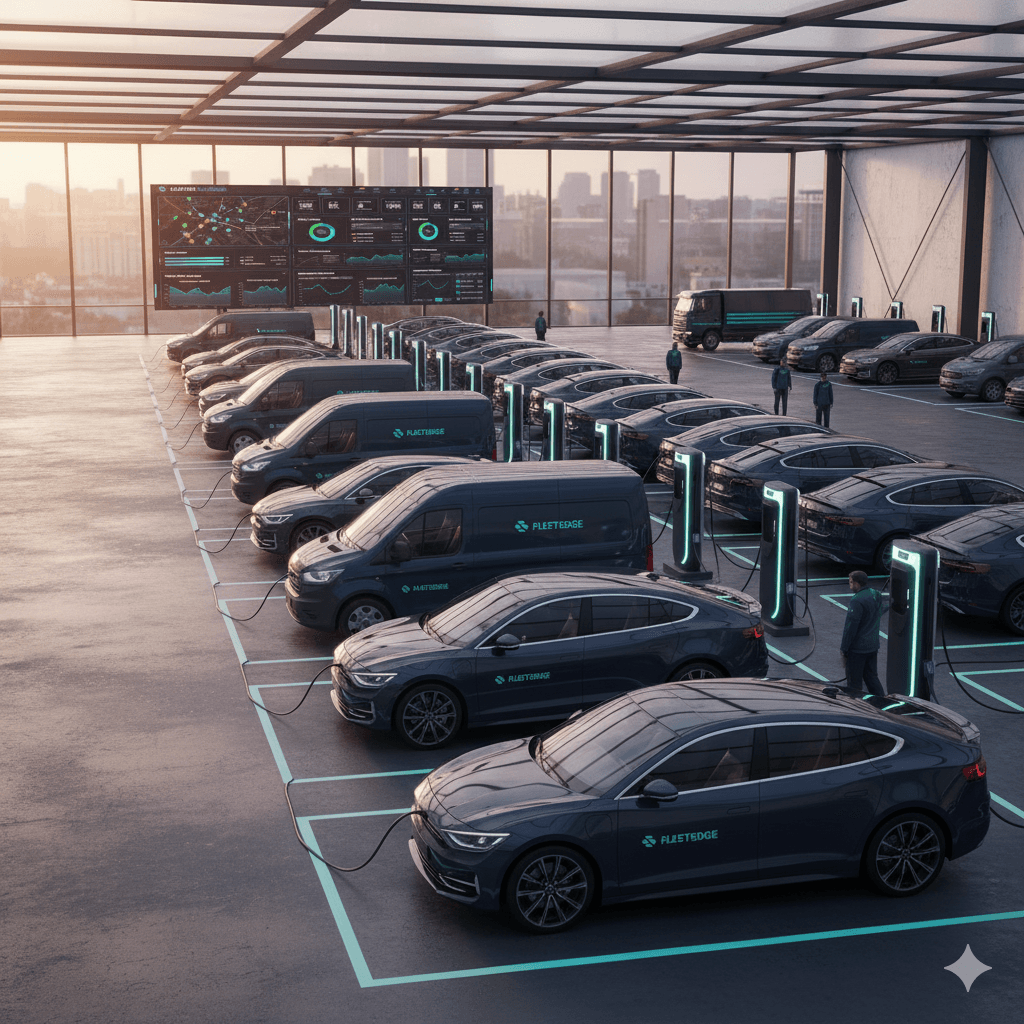
What does it mean to integrate a fleet into an IT system?
Fleet integration into company systems means linking all vehicle data with the company's internal tools. It is a combination of telematics, ERP, accounting, service, insurance or HR systems.
The main elements of integration
- Vehicle data collection - GPS, consumption, mileage, OBD, fault diagnostics.
- Interfacing with internal systems - ERP, CRM, accounting, DMS.
- Process automation - service notifications, invoicing, cost control.
- Risk management - driving monitoring, insurance claims, compliance.
- Performance evaluation - fleet efficiency reporting.
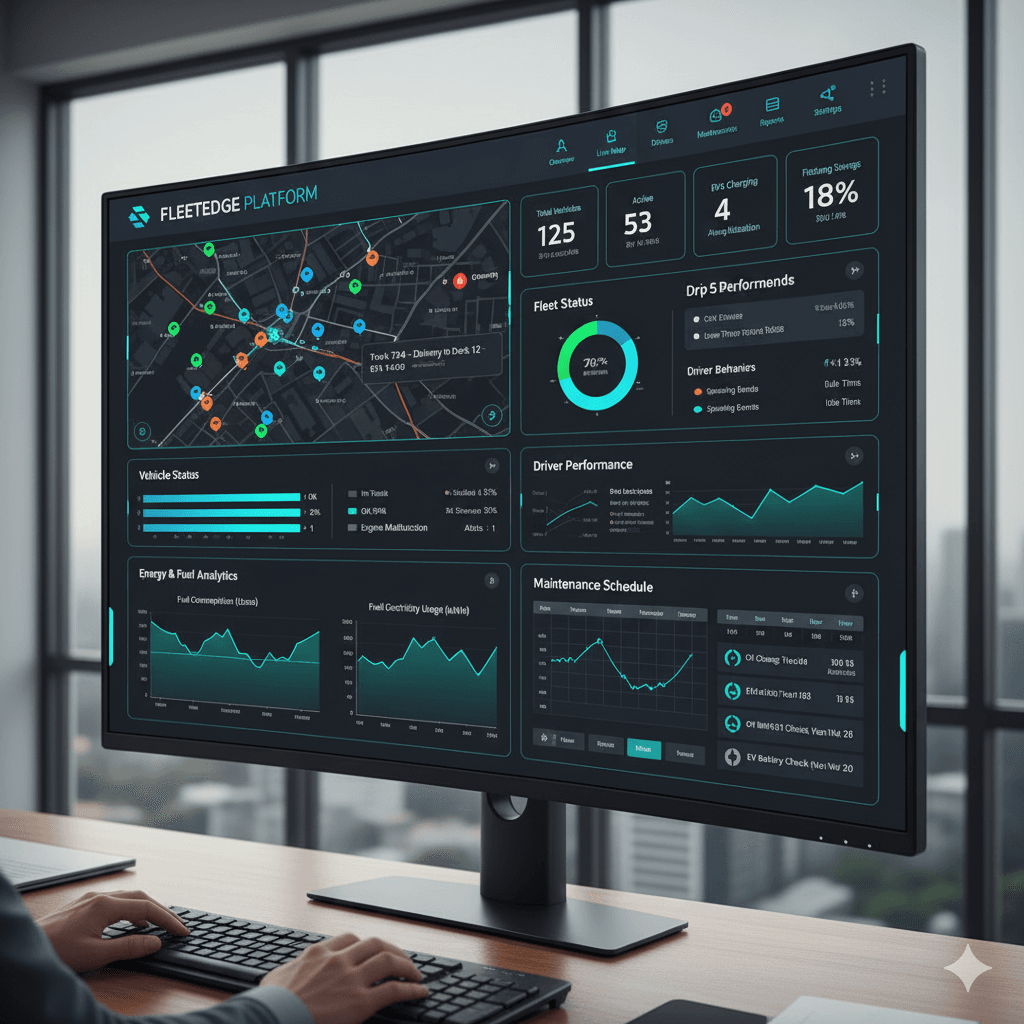
Why do companies need an integrated fleet? (Data and benefits)
Companies that have moved to integrated fleet management report the following results, according to a European survey by Frost & Sullivan:
- 26% reduction in operating costs,
- 20-30% savings in fleet manager time,
- 15% fewer insurance claims due to driver behaviour monitoring,
- 20% lower CO2 emissions with efficient route planning.
The biggest benefits for companies
- Elimination of manual data transcription.
- Transparent recording of kilometres, consumption and costs.
- Faster data-driven decision making.
- Stronger control over servicing, MOTs, insurance and claims.
- Better predictability of future costs.
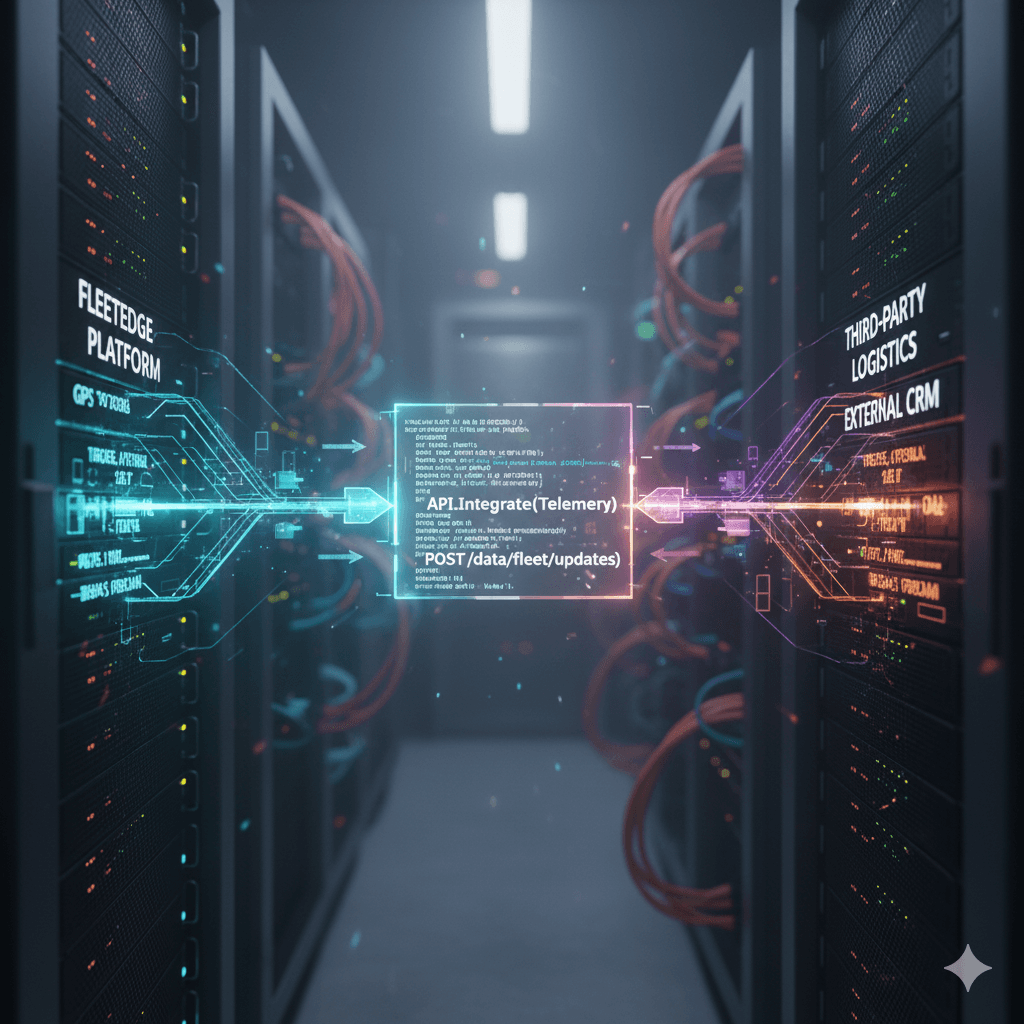
What solutions exist? Comparison of options
There are three main approaches for companies in Slovakia and the EU.
1. Complete telematics solutions (Teltonika, Webfleet, Geotab)
Suitable for large fleets and companies with a high level of automation.
Advantages:
- You get accurate data in real time.
- Possibility of API connections with internal systems.
- Predictive analytics (service, driving styles, inefficient trips).
- IoT device support.
Disadvantages:
- Higher implementation costs.
- Technical capacity of IT department required.
2. Connection via internal ERP / DMS system (SAP, Odoo, Helios, Microsoft Dynamics)
Advantages:
- Centralization of all data in the company.
- Automatic invoicing and cost management.
- Integrated approval and workflow.
Disadvantages:
- Need for custom modifications.
- Lower data granularity in the absence of telematics.
3. Hybrid fleet solutions (e.g. AVIS, AVIS Lease, Avis Maxirent)
Ideal for companies that want both outsourcing and technical solutions.
Advantages:
- Complete vehicle management including data.
- Regular reports and automated outputs.
- Modern platforms for corporate clients.
Disadvantages:
- Dependency on partner (but lower liability for the firm).
How does the integration process work? (Step by step)
1. Audit of the current fleet
- Number of cars, age, service status,
- existing IT systems,
- available vehicle data.
2. Choice of technology and partner
- Telematics vs. ERP vs. hybrid,
- compatibility with internal systems,
- TCO (Total Cost of Ownership).
3. Hardware/software installation
- GPS/OBD modules,
- SIM cards and IoT connectivity,
- API connections.
4. Testing and workflow setup
- Automatic notifications,
- data validation,
- setting up team responsibilities.
5. Reporting and optimization
- Fleet KPIs,
- Predictive maintenance,
- benchmarks.
Trends in fleet digitalization (2025-2030)
The most important trends
- AI analysis of driving patterns (detection of risky behaviour).
- Digital Twin Vehicles.
- OTA updates.
- Full automation of the service process.
- Shared mobility in the corporate environment.
- EV fleets and their interconnection with energy systems.
Concrete data from around the world
- According to McKinsey, up to 95% of company cars will be IoT connected by 2030.
- According to ACEA, the share of corporate EVs will rise to 34% of all new registrations in the EU.
Investment insight: How much does integration cost and what does it deliver?
Costs
- Telematics unit: €50-150,
- Installation: 15-30 €,
- monthly data fee: 1-3 €,
- API integration: €500-5,000 (depending on complexity).
ROI (Return on Investment)
- Savings on fuel: 5-12%,
- savings on service: 7-20%,
- reduction of administration: 20-40 hours per month,
- reduction in insurance claims: 10-20%.
For a fleet of 50 vehicles, integration can bring savings of up to €25,000-60,000 per year.
FAQ - Frequently Asked Questions
- How long does it take to integrate a fleet? Typically 2-6 weeks depending on the size of the company and IT complexity.
- Do I need telematics on all my cars? No, but for larger fleets it is a significant efficiency benefit.
- How much data does a GPS/OBD device consume? Typically 50-200 MB per month.
- Can integration be done in small companies? Yes, even for fleets of 5 cars or less, digitalization is beneficial.
Quick summary
- Integrated fleet = savings, automation and accurate data.
- Modern companies combine telematics, ERP and data connectivity.
- ROI for a fleet of 50 cars can be up to €60,000 per year.
- Key trends: AI, digital twin, electromobility, automation.
- The biggest benefit is cost control and prevention.
Keywords and entities
KW: data integration, corporate IT, fleet analytics, digitalization, automation, telematics, fleet management, ERP.
Entities: Teltonika, Geotab, Webfleet, AVIS, AVIS Lease, McKinsey, ACEA, Frost & Sullivan.
Conclusion
Integrating fleet into corporate IT is one of the most beneficial investments a modern company can make. It brings control, cost savings, efficient processes and competitive advantage.
If you want to implement modern solutions for your fleet, contact AVIS - the leader in corporate mobility in Slovakia.