
Hybrid Work and Fleet Utilization: How Fleet Utilization Is Changing
In recent years, the hybrid work model has become a common feature of how many companies operate. Employees combine office work with working from home, and both the number of business trips and the way company vehicles are used are changing. That is precisely why the topic of hybrid work is increasingly linked to the question of how to effectively manage fleet usage.
Many companies have now realized that the fleet they set up several years ago no longer meets their current needs. Some vehicles sit idle for several days, while others are constantly booked. The result is inefficient use of investments, higher operating costs, and more complicated mobility planning.
Modern fleet management, therefore, is not based solely on the number of vehicles, but primarily on their actual utilization. In this article, we’ll look at how hybrid work affects corporate fleets, what trends we’re seeing, and how to adapt fleet management to this new way of working.
Why Hybrid Work Is Changing Fleet Utilization
Hybrid work has significantly changed the day-to-day routines of employees.
Many no longer commute to the office every workday, and business meetings are increasingly moving online.
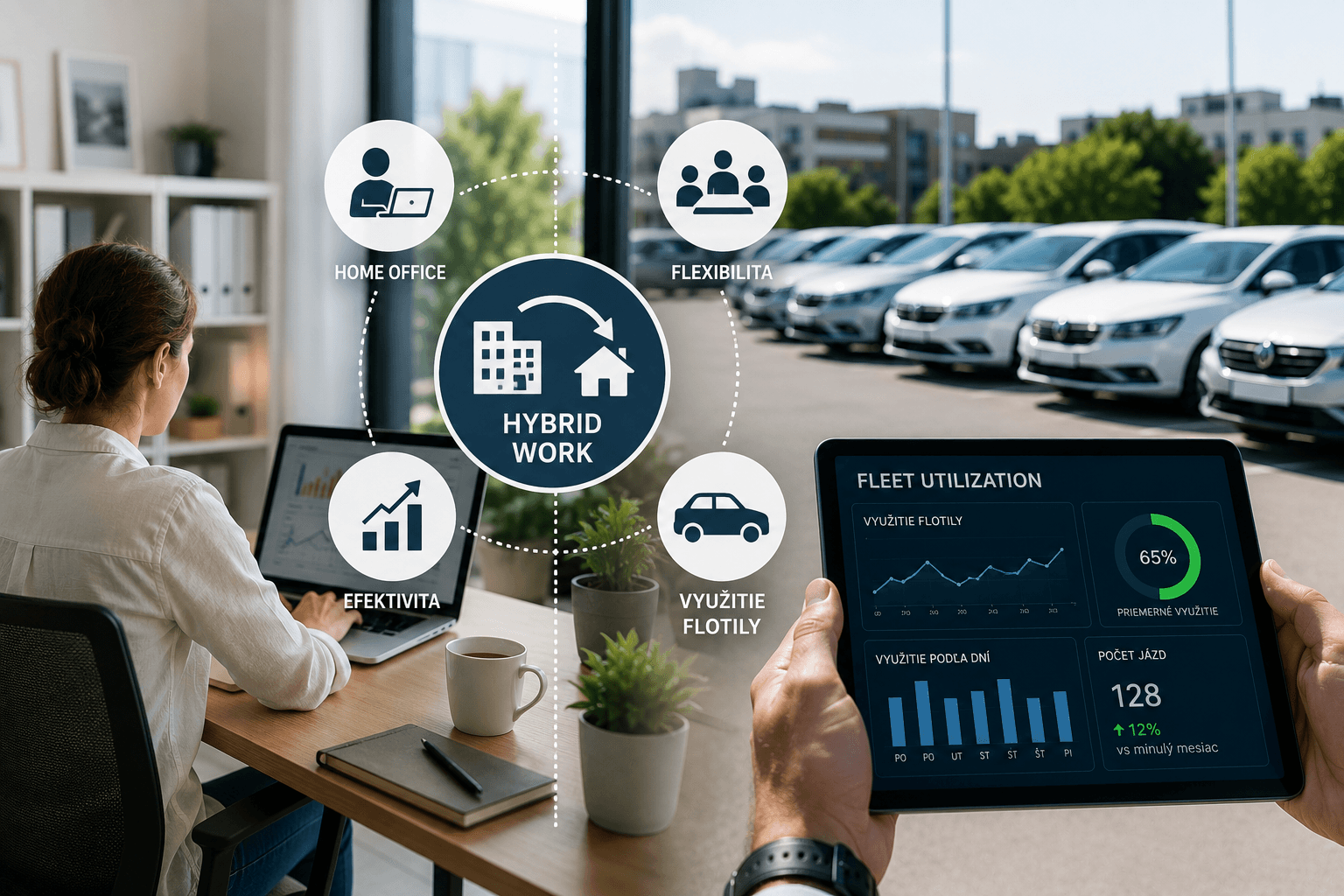
This presents new challenges for fleet managers.
The most common changes include:
- fewer regular trips,
- greater fluctuations in vehicle usage,
- varying workloads for individual vehicles,
- a greater need for flexible vehicle allocation.
As a result, the same number of vehicles may not be used as efficiently today as they were before the hybrid mode was introduced.
Hybrid Work and Fleet Utilization Based on Real-Time Data
One of the greatest benefits of modern fleet management is the availability of data.
Today, companies can track:
- the number of trips,
- kilometers driven,
- vehicle downtime,
- reservation frequency,
- average weekly utilization,
- seasonal fluctuations.
It is precisely this data that shows that fleet utilization tends to be uneven under a hybrid model. Mondays and Fridays can be significantly quieter than the middle of the week, when employee presence in offices is at its highest.
What Problems Does Lower Fleet Utilization Cause?
Higher fixed costs
Even when vehicles are parked, the company continues to pay for:
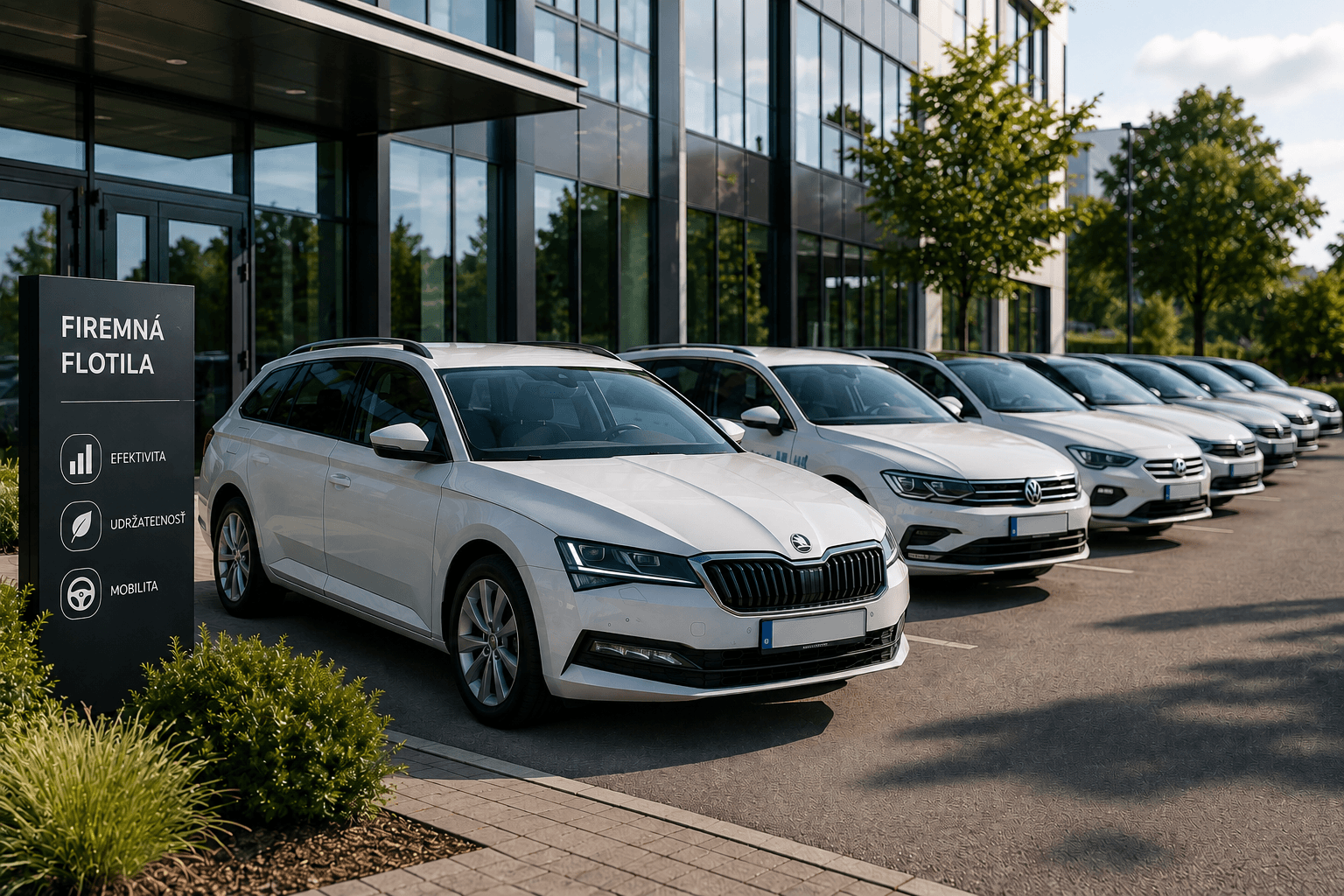
- leasing,
- insurance,
- maintenance,
- administrative costs,
- parking.
Lower usage therefore does not automatically mean lower costs.
Uneven wear and tear
Some vehicles are driven daily, while others remain unused.
This situation complicates both service scheduling and fleet renewal planning.
Inefficient investments
If a company operates more vehicles than it actually needs, it ties up capital in assets that do not provide commensurate value.
How to Optimize Fleet Utilization in a Hybrid Work Environment
A hybrid work model requires a new approach to fleet management.
Successful companies implement multiple measures simultaneously.
Among the most effective are:
- vehicle sharing across departments,
- digital reservation systems,
- regular utilization reviews,
- flexible vehicle allocation,
- optimizing the number of vehicles.
The goal is not to have the largest possible fleet, but a fleet that meets the organization’s actual needs.
Data matters more than intuition
In the past, it was common to assign company vehicles to specific employees.
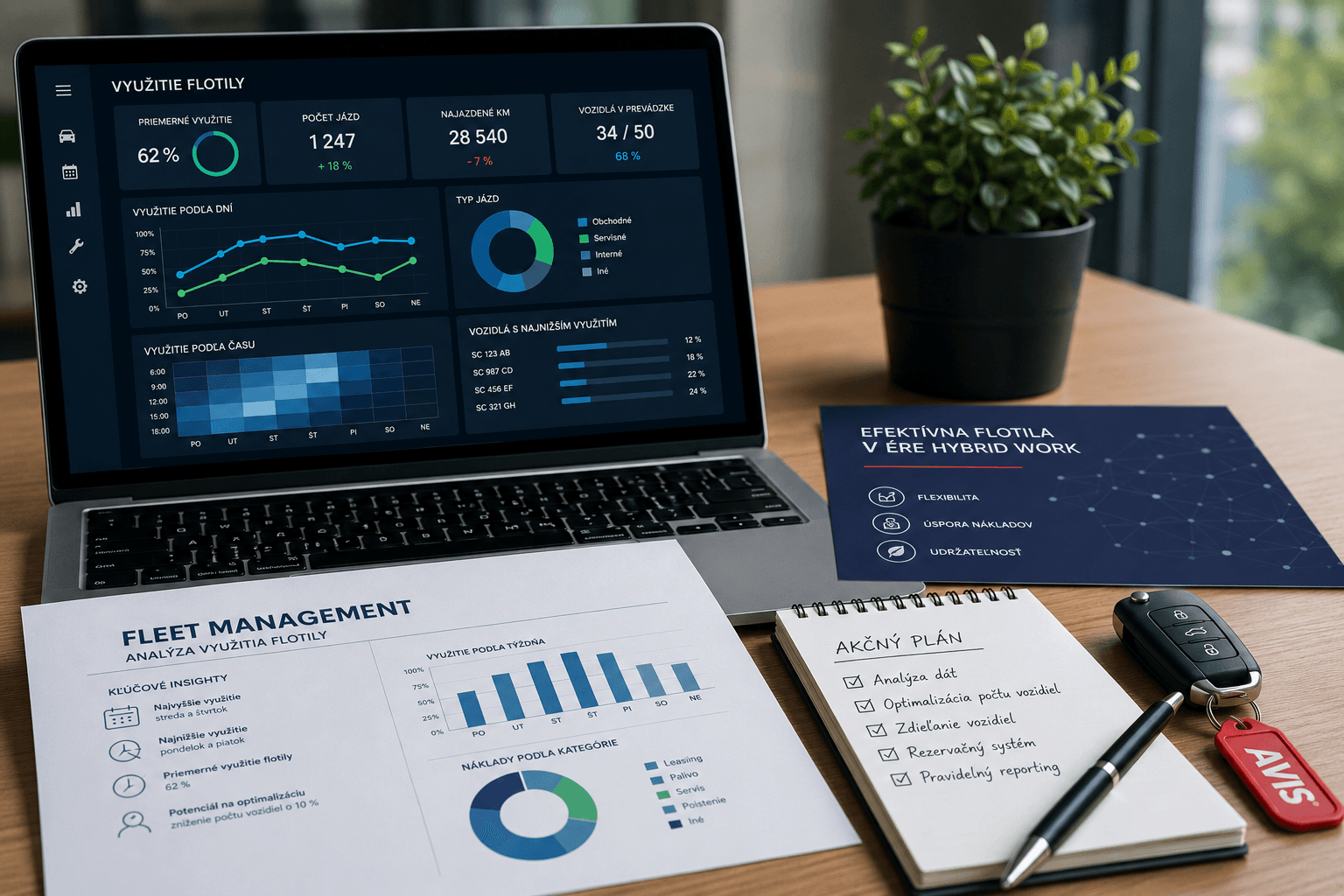
Today, more and more companies are making decisions based on data.
It’s worth tracking:
- average vehicle utilization,
- cost per kilometer,
- downtime,
- reservations during the week,
- maintenance costs,
- total operating costs.
This approach makes it possible to identify vehicles that can be transferred to another department or removed from the fleet entirely.
Shared Mobility as a Natural Part of Hybrid Work
One of the most prominent trends in recent years is internal car sharing.
Instead of assigning a single vehicle to one employee, cars are reserved by those who actually need them.
Advantages of this model:
- higher vehicle utilization,
- fewer cars in the fleet,
- simpler reservation management,
- lower operating costs,
- better fleet renewal planning.
For companies with a hybrid work model, this is often one of the most effective solutions.
The Future of Fleet Management in the Era of Hybrid Work
Hybrid work is likely to remain the norm in the coming years.
This means that fleet management will increasingly rely on:
- data analytics,
- digitization,
- flexibility,
- predictive planning,
- automated processes.
Companies that can adapt the size and structure of their fleet to actual usage will gain a significant competitive advantage and reduce unnecessary operating costs.
Conclusion
The hybrid work model is fundamentally changing the way companies use their fleets. The traditional approach based on permanently assigned vehicles no longer reflects the actual needs of employees in many organizations.
Regular data monitoring, fleet utilization optimization, and a flexible approach to fleet management help reduce costs, increase efficiency, and better prepare companies for future changes in the work environment.
FAQ
How does hybrid work affect fleet utilization?
Hybrid work reduces the frequency of trips and results in uneven vehicle utilization throughout the week.
Why is it important to track fleet utilization?
It helps identify underutilized vehicles, optimize the number of cars, and reduce operating costs.
Is car sharing suitable for a hybrid work model?
Yes. Shared vehicles allow for better utilization of the existing fleet and reduce the need for additional vehicles.
What data should a fleet manager track?
Primarily the number of trips, kilometers driven, downtime, vehicle reservations, maintenance costs, and cost per kilometer.
How can a company optimize its fleet for a hybrid work model?
Through regular data analysis, flexible vehicle allocation, the use of reservation systems, and ongoing optimization of fleet size.
TL;DR
- Hybrid work is changing the way company vehicles are used.
- Effective fleet utilization requires regular data analysis.
- Shared mobility helps reduce the number of unused vehicles.
- Digitization and reservation systems increase the efficiency of fleet management.
- A flexibly managed fleet results in lower costs and better utilization of company resources.