
A Financial and Practical Comparison: When Is It Worth It to Rent a Car Long-Term for a Few Months, and When Is an Operating Lease for 2–3 Years a Better Option?
Sooner or later, every company finds itself in a situation where it needs to expand its fleet. However, the question is not just about choosing the right vehicle, but also about finding the right way to finance it. Long-term car rental is the ideal solution for short-term needs, while operating leases offer advantages for long-term corporate mobility planning.

The decision between these two options affects not only monthly costs but also flexibility, administrative burden, cash flow, and the company’s ability
the company to respond to changing business conditions. If you choose an unsuitable financing model, you may end up paying unnecessarily for services or, conversely, committing to a term that does not suit your company.
In this article, we’ll compare the financial and practical differences between a long-term car rental for several months and an operating lease for a period of 2 to 3 years. We’ll also look at specific situations in which one solution is more advantageous than the other.
What Is a Long-Term Car Rental?
A long-term car rental is a flexible service in which a company or self-employed individual rents a vehicle for a period of several months without the need for a long-term commitment.
In most cases, the monthly price includes:
- service and regular maintenance,
- mandatory contractual insurance,
- collision insurance,
- a toll sticker,
- roadside assistance,
- seasonal tire changes according to the provider’s terms.
It is precisely this high level of flexibility that makes long-term car rental the ideal solution for temporary vehicle needs.
When is a long-term car lease a good idea?
There are many situations where a long-term car lease is the best solution, both economically and logistically.
Seasonal capacity expansion
Companies in the construction, tourism, logistics, or retail sectors often need additional vehicles for just a few months.
Leasing allows companies to use vehicles only during the period when they actually need them.
New project or contract
If a company has secured a large contract lasting six to twelve months, it is not cost-effective to enter into a multi-year lease.
Once the project is complete, the company simply returns the vehicle.
Employee probationary period
When hiring new salespeople or managers, a long-term lease may not be the best solution.
Renting allows a vehicle to be assigned immediately and without long-term commitments.
Replacement Vehicle
If you’re waiting for a new company car to be delivered or your vehicle is in the shop, short-term long-term rental offers a practical alternative without disrupting your business operations.
When is an operating lease more advantageous?
Operating leases are primarily intended for companies that plan to use vehicles long-term and want stable monthly costs.
The term is most commonly 24 to 48 months.
Operating leases are particularly worthwhile when:
- the vehicles are a permanent part of the company’s fleet,
- the company plans for long-term growth,
- the number of employees does not change significantly,
- the company prefers predictable monthly expenses,
- it does not want to deal with the sale of used vehicles.
For longer terms, the monthly payment is generally more cost-effective than with short-term leasing.
Financial Comparison of Both Solutions
When making a decision, companies should not focus solely on the monthly cost.
The total costs over the entire period of vehicle use are also important.
Long-term lease
Advantages:
- No high initial investment,
- easy termination after the agreed-upon period,
- high flexibility,
- suitable for uncertain business conditions.
Disadvantages:
- higher monthly cost for very long-term use,
- not intended for stable use over several years.
Operating Lease
Advantages:
- lower monthly costs for longer-term contracts,
- simplified corporate financial planning,
- comprehensive fleet management.
Disadvantages:
- longer contractual commitment,
- less flexibility in the event of unexpected changes.
A Practical Comparison by Company Type
Not every company has the same needs.
The following examples show which solution is usually the most suitable.
Startup or growing company
Recommendation:
Long-term car lease.
Reason:
The company cannot yet accurately predict its future growth or the number of employees.
Stable manufacturing company
Recommendation:
Operating lease.
Reason:
The vehicles will be used for several years without significant changes.
Project-based company
Recommendation:
Long-term car lease.
Reason:
Once the project is complete, the vehicles may no longer be needed.
A sales company with dozens of salespeople
Recommendation:
Operating lease.
Reason:
It results in lower costs for long-term fleet use.
Flexibility versus long-term cost optimization
The biggest difference between the two solutions is flexibility.
Long-term leasing allows you to respond to your company’s current situation almost immediately. If the number of employees, order volume, or business plans change, the vehicles can simply be returned or exchanged at the end of the lease.
Operating leases, on the other hand, benefit companies with a clear growth strategy and stable needs. A longer lease term results in lower monthly costs and more efficient budget planning.
Therefore, there is no one-size-fits-all solution. The key factors are the company’s current goals and its expected growth in the coming years.
How can AVIS Maxirent help you?
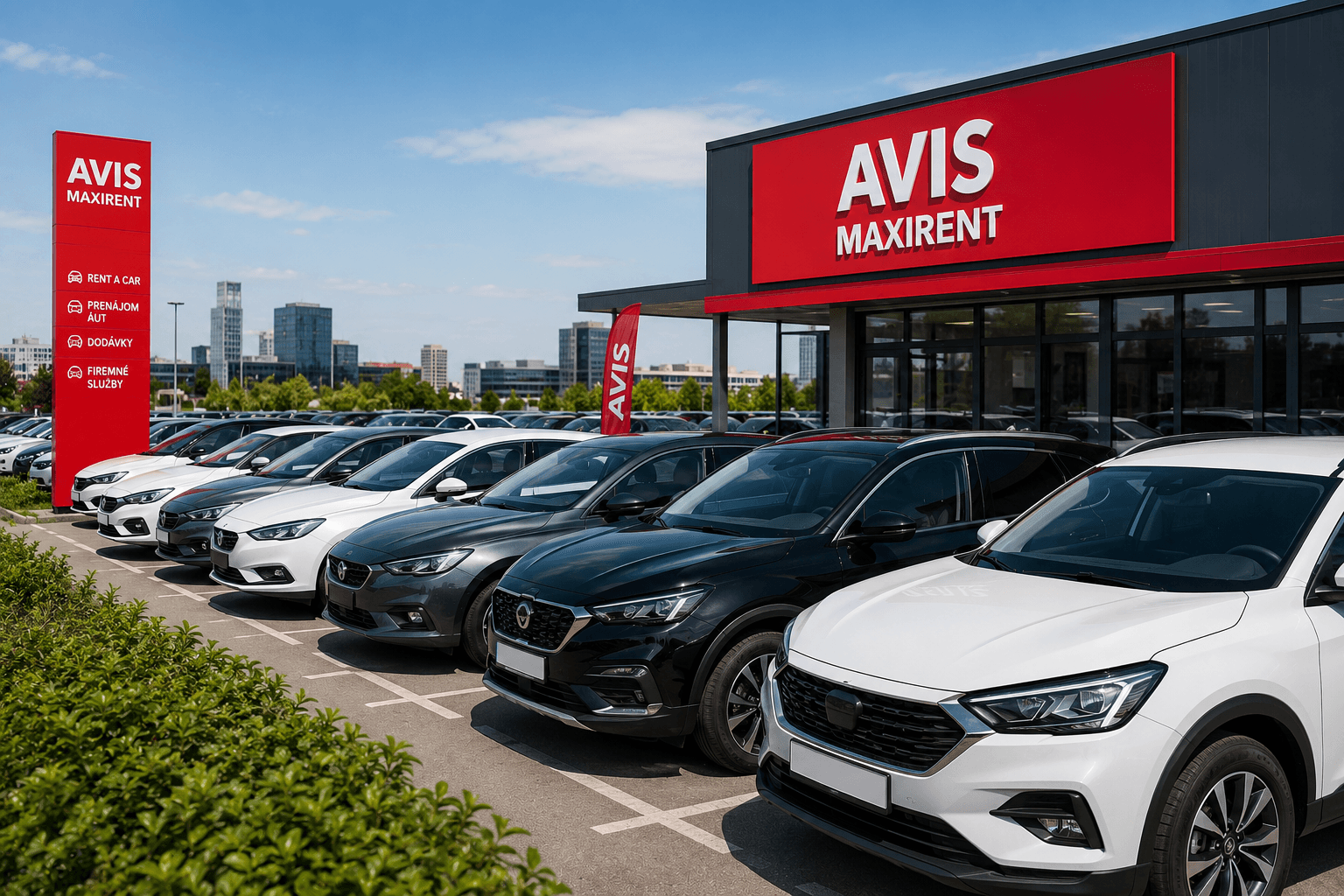
If you need a vehicle for several months without long-term commitments, AVIS Maxirent offers flexible long-term rentals for both companies and entrepreneurs. The benefits include quick vehicle availability, transparent monthly costs, and services included in a single regular payment.
For companies that prefer a long-term corporate mobility solution, operating leases may be a more suitable alternative. Choosing the right model depends on the planned duration of vehicle use, the required flexibility, and the financing method.
With the right solution, a company can optimize costs, simplify fleet management, and maintain the necessary flexibility for business growth.
FAQ
Is long-term car leasing also suitable for small businesses?
Yes. It’s ideal for sole proprietors, startups, and smaller companies that need a vehicle for a few months without a long-term commitment.
When is an operating lease more cost-effective?
Especially if you plan to use the vehicle for at least two to three years and want stable monthly costs.
What is typically included in a long-term lease?
In most cases, service, insurance, roadside assistance, maintenance, and other services, depending on the provider’s terms.
Is it possible to replace the vehicle at the end of the lease?
Yes. Flexibility is one of the main advantages of a long-term lease.
How do you choose between rental and leasing?
The deciding factors are the planned duration of vehicle use, the required flexibility, the company’s expected growth, and the total costs over the entire period of use.
TL;DR
- Long-term car rental is ideal for a period of several months.
- Operating lease is more cost-effective when using a vehicle for 2 to 3 years.
- Renting offers high flexibility and minimal commitments.
- Leasing results in lower monthly costs for long-term use.
- AVIS Maxirent is a suitable solution for companies that need flexible corporate mobility without unnecessary complications.