
Digital Twins in Corporate Fleets: Simulating Costs and Emissions Before Purchasing Vehicles
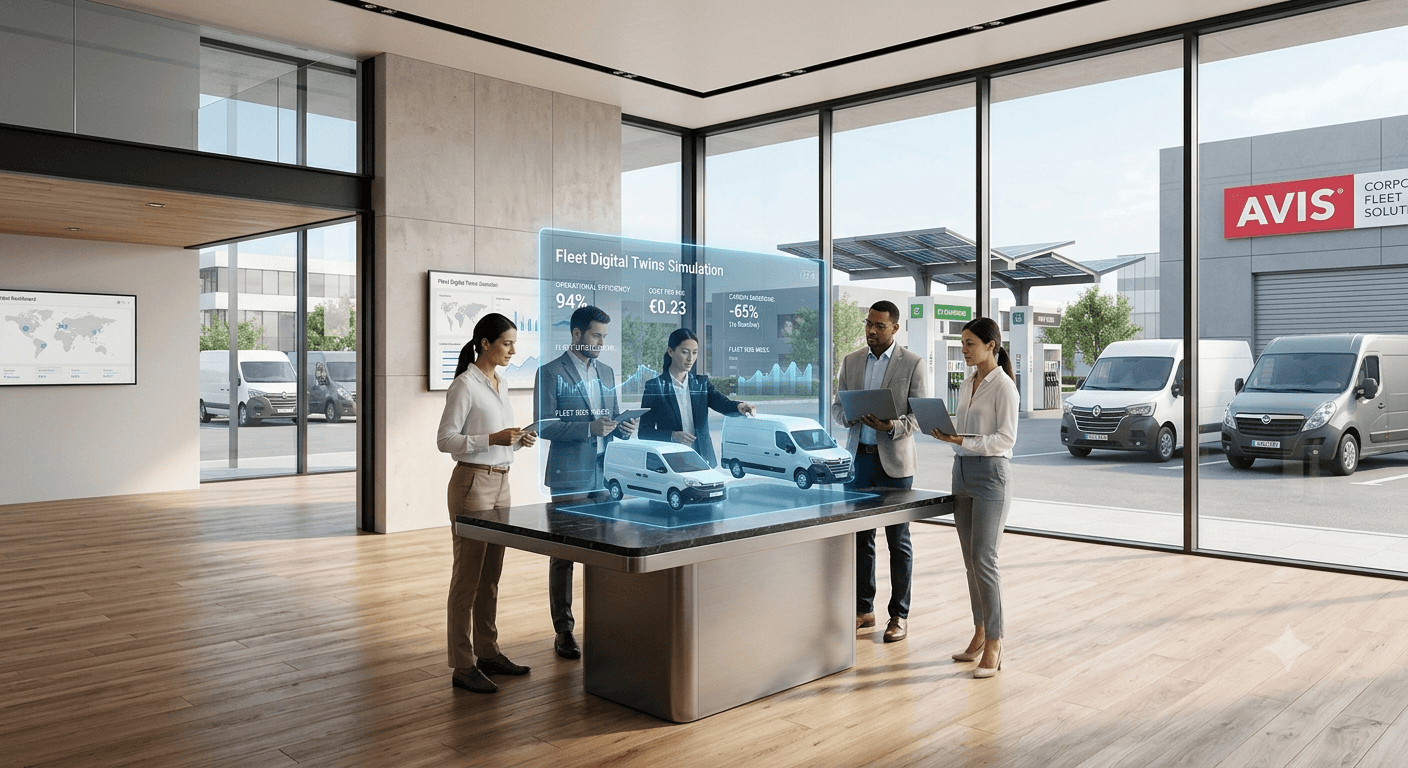
Digital transformation is changing the way companies plan their fleet renewals. While until recently, decisions about vehicle purchases were based primarily on historical data, the experience of fleet managers, and manufacturers’ price quotes, today Digital Twin technology is entering the process. This technology makes it possible to create a digital twin of an entire corporate fleet and, even before the actual purchase, simulate future operating costs, energy consumption, CO₂ emissions, and the efficiency of individual vehicle types.
Modern fleet simulation leverages big data, artificial intelligence, and predictive modeling. This enables companies to compare various fleet renewal scenarios without having to invest in actual vehicles. The result is more accurate decisions, lower total cost of ownership (TCO), and better achievement of ESG goals.
In this article, we’ll look at how Digital Twin works in fleet management, what benefits fleet simulation offers, and why AI Mobility is becoming one of the most important trends in corporate mobility in 2026.
What Is a Digital Twin and Why Is It Transforming Fleet Management
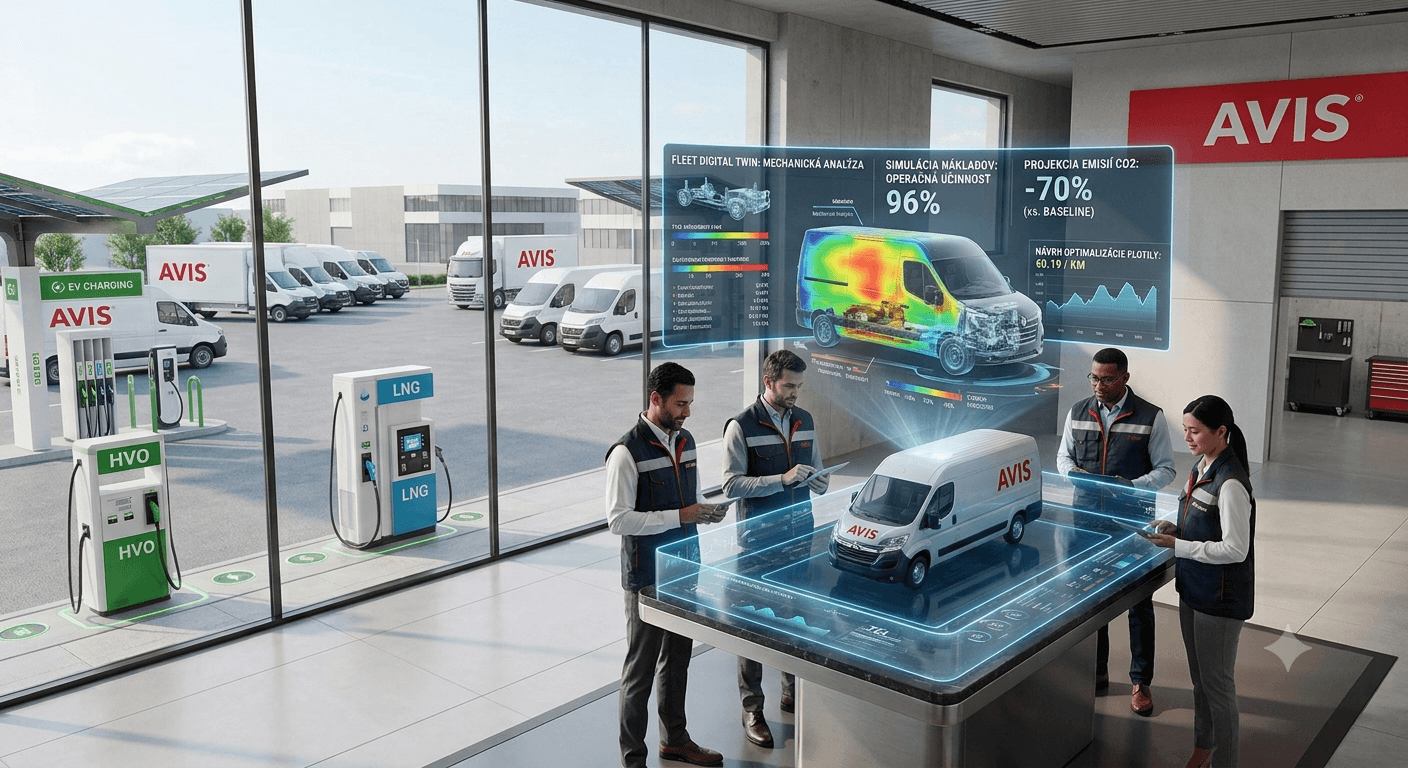
A Digital Twin is a digital model of a real-world object or process. In fleet management, it is a virtual copy of a fleet that operates using real operational data.
A Digital Twin can contain information about:
- fuel or electricity consumption,
- mileage of individual vehicles,
- maintenance costs,
- drivers’ driving styles,
- routes,
- CO₂ emissions,
- vehicle utilization.
This makes it possible to simulate, even before making an investment, how the fleet will perform after replacing vehicles or changing the mode of operation.
Fleet Simulation: How Fleet Simulation Reduces Costs
Modeling Various Scenarios
Fleet Simulation allows you to compare multiple alternatives without financial risk.
For example, managers can simulate:
- replacing diesel vehicles with electric vehicles,
- the deployment of hybrid vehicles,
- the use of alternative fuels,
- a change in the number of vehicles in the fleet,
- a new route allocation.
Each scenario immediately shows the estimated costs and environmental impact.
More Accurate Investment Planning
Simulation eliminates decision-making based on estimates. Instead of intuitive decisions, the company receives data-driven recommendations.
Digital Twin helps optimize emissions and TCO
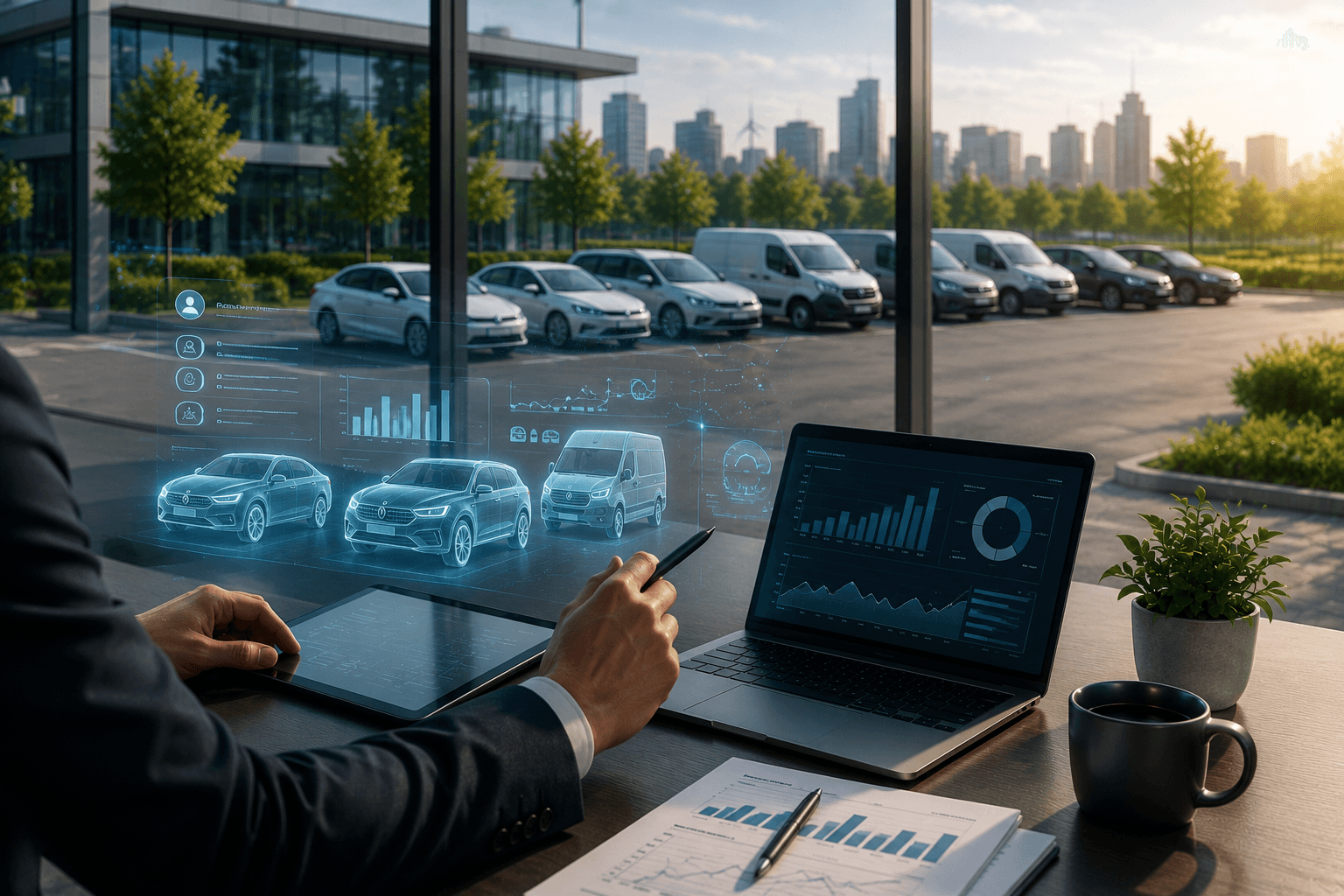
One of the greatest advantages of the Digital Twin is the ability to track the total cost of ownership of vehicles even before they are purchased.
The model can evaluate:
- purchase price,
- fuel consumption,
- maintenance costs,
- residual value,
- insurance costs,
- CO₂ emissions,
- operational risks.
The result is a realistic view of the economics of the entire fleet over its lifecycle.
AI Mobility is transforming fleet managers’ decision-making
Today, artificial intelligence can analyze millions of data points that would take a human several weeks to process.
AI Mobility uses, for example:
- prediction of service interventions,
- estimating residual vehicle values,
- route optimization,
- electric vehicle charging planning,
- recommendations for suitable vehicle types based on usage patterns.
Fleet managers thus receive data-driven recommendations rather than general assumptions.
When Is It Worth Using a Digital Twin?
A Digital Twin offers the greatest benefits to organizations that manage larger vehicle fleets or regularly renew their fleet.
Most commonly, these include:
- logistics companies,
- manufacturing companies,
- retail companies,
- service organizations,
- companies with international operations.
The more data the system has available, the more accurate its recommendations are.
How to Get Started with Fleet Simulation
Successful implementation starts with high-quality data.
Recommended procedure:
- Collect operational data on your current fleet.
- Evaluate how the vehicles are being used.
- Define business objectives.
- Create simulation scenarios.
- Evaluate both economic and environmental outcomes.
- Determine the optimal composition of the future fleet.
This approach minimizes investment risk and increases return on investment.
The future of fleet management belongs to digital twins
Digital Twins are gradually becoming a standard part of strategic mobility management. Advances in artificial intelligence, telematics, and cloud technologies enable the creation of increasingly accurate simulation models.
In the future, it will be possible to predict breakdowns in real time, optimize operations based on current traffic conditions, or automatically recommend vehicle replacements before operating costs rise.
Companies that start using digital twins today will gain a competitive advantage not only in cost management but also in meeting environmental goals and strategic mobility planning.
Conclusion
Decisions about the future of a company’s fleet no longer need to be based on guesswork. Digital Twin, Fleet Simulation, and AI Mobility make it possible to simulate the economic and environmental consequences of various scenarios even before purchasing vehicles.
This approach helps companies make more accurate decisions, optimize total cost of ownership, and prepare for future market and regulatory requirements. Digital Twins are thus becoming an essential tool in modern fleet management.
FAQ
What is a Digital Twin in fleet management?
It is a digital replica of a fleet that simulates its future operation based on real-world data.
What is Fleet Simulation used for?
It helps compare different fleet renewal scenarios and predict costs, fuel consumption, and emissions even before purchasing vehicles.
How does AI Mobility use artificial intelligence?
It analyzes operational data, predicts costs, optimizes routes, and recommends the most suitable vehicles for a specific operation.
Is Digital Twin also suitable for smaller companies?
Yes, the benefits increase with fleet size, but digital twins can also help companies with fewer vehicles.
What data is needed to create a digital twin?
Primarily data on mileage, fuel consumption, maintenance costs, vehicle utilization, routes, and emissions.
TL;DR
- Digital Twin creates a digital model of a company’s fleet.
- Fleet Simulation allows you to compare different fleet renewal scenarios without investment risk.
- AI Mobility uses artificial intelligence to enable more accurate decision-making.
- Simulations help optimize both TCO and CO₂ emissions.
- Digital twins are becoming an important part of modern fleet management.
- Data-driven decision-making leads to greater efficiency and better achievement of ESG goals.