
What pitfalls, mileage limits, assessments of excessive wear and tear, and hidden fees should you watch out for when signing a long-term car lease agreement?
If you’re considering a long-term car lease, you’re probably comparing prices, vehicle availability, and monthly payments. However, when it comes time to sign the contract, it’s often the details—which may not be immediately apparent—that make the difference. Mileage limits, rules for assessing vehicle wear and tear, conditions for early termination of the lease, or various administrative fees can significantly impact the total cost.
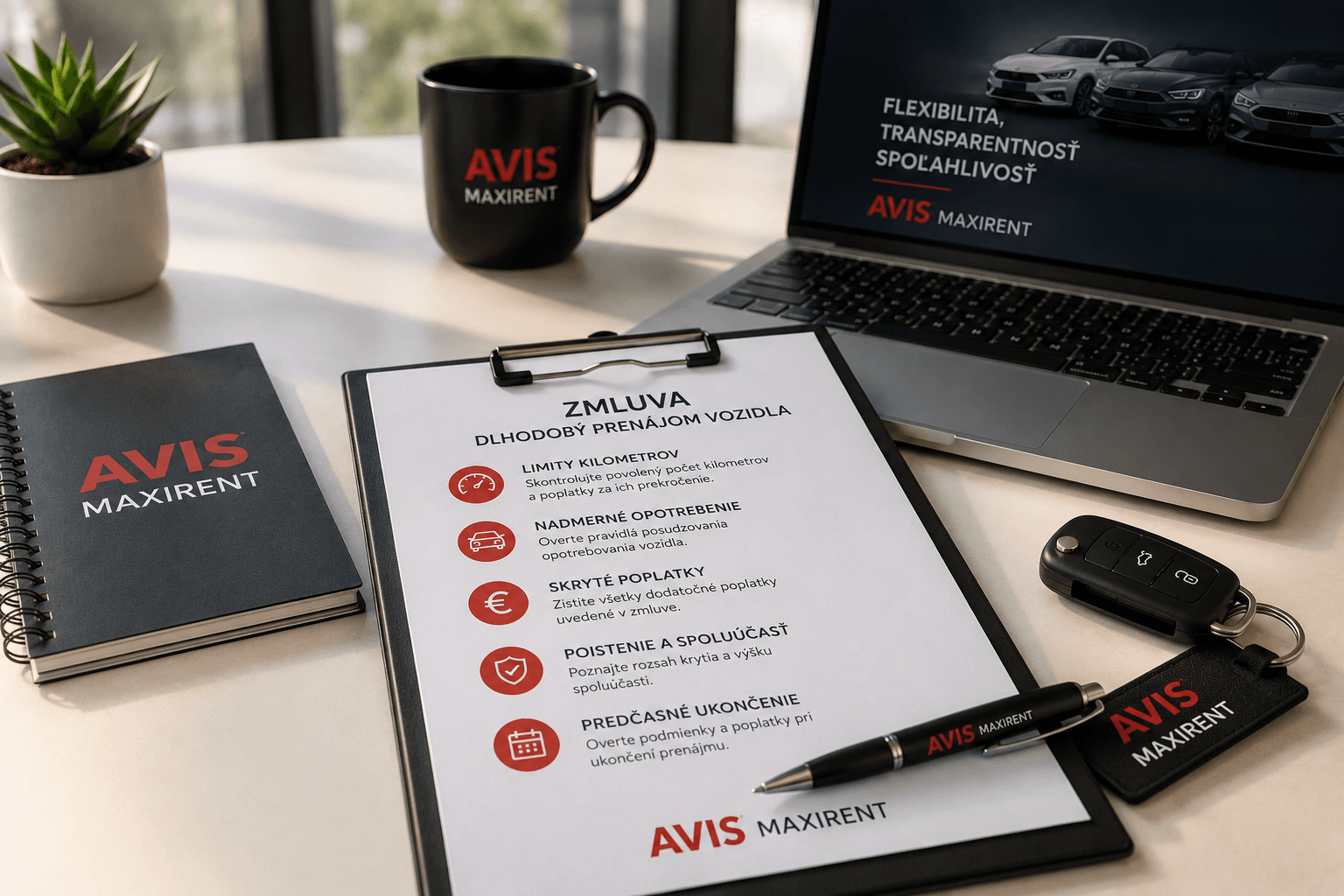
A reputable long-term car rental provider should have clear, transparent contract terms with no unpleasant surprises. That’s why it’s worth taking the time to thoroughly review the contract before signing it.
In this article, we’ll look at the most common pitfalls of long-term car rentals, explain what to watch out for, and how to choose a reliable partner. We’ll also show why transparency in terms and conditions is one of the main reasons why both businesses and individuals use Avis Maxirent’s services.
Long-Term Car Leases: Why Is Comparing Price Alone Not Enough?
The monthly price is often the first piece of information a customer looks at. On its own, however, it says nothing about what the rental actually includes.
A cheaper offer may include:
- a lower mileage limit,
- a higher deductible in the event of an insurance claim,
- service fees,
- administrative fees,
- penalties for early termination of the rental.
When comparing offers, therefore, always look at the overall terms and conditions, not just the monthly price.
Mileage limits are among the most common pitfalls in long-term car leases
One of the most important factors is the annual or monthly mileage included in the lease.

If you exceed the limit, the provider may charge a fee for each additional kilometer.
Before signing the contract, check:
- how many kilometers are included,
- the price per kilometer over the limit,
- whether the limit can be adjusted during the rental period,
- how mileage is tracked.
If you regularly drive on business trips or across the country, choosing the right mileage package can save you hundreds of euros a year.
How is excessive wear and tear on a vehicle assessed?
Every vehicle naturally wears out during use. However, there is a difference between normal use and damage that exceeds standard wear and tear.
The following, for example, may be considered excessive wear and tear:
- deep scratches,
- damaged wheel rims,
- a cracked windshield,
- dents in the body,
- damaged interior,
- torn upholstery.
Reputable providers use clearly defined rules for assessing wear and tear so that the customer knows what to expect when returning the vehicle.
Hidden fees worth checking before signing the contract
Not all costs are always visible in the advertisement.
Read the terms and conditions carefully before signing.
Pay particular attention to fees for:
- administrative services,
- early termination of the rental,
- driver changes,
- vehicle delivery or pickup,
- processing an insurance claim,
- exceeding the mileage limit,
- late return of the vehicle.
A transparent pricing policy is one of the most important hallmarks of a quality car rental company.
What should you look out for when it comes to insurance?
Not all packages include the same level of coverage.
Before signing, check:
- the deductible amount,
- the scope of collision coverage,
- tire damage coverage,
- windshield coverage,
- roadside assistance,
- a replacement vehicle during repairs.
While comprehensive insurance may increase your monthly premium, it significantly reduces the risk of high one-time expenses.
Can you exchange or return the vehicle early during the rental period?
Life circumstances change, and so do a driver’s needs.
Some companies allow for flexible vehicle exchanges or early termination of the lease, while others have strictly defined minimum lease periods and penalties for early termination.
Before signing, ask:
- Is it possible to change the vehicle model?
- What are the terms for early termination?
- Are there any notice periods?
- Is there a fee for changing vehicles?
This information can be crucial, especially for companies with fluctuating headcounts.
Checklist: What to Check Before Signing a Long-Term Car Lease Agreement?
Before signing, we recommend going through this simple checklist.
✓ Monthly or annual mileage limit
✓ Price per extra kilometer
✓ Scope of insurance
✓ Deductible amount
✓ Vehicle return conditions
✓ Rules for assessing wear and tear
✓ Option to exchange the vehicle
✓ Administrative fees
✓ Early termination conditions
✓ Maintenance, tire service, and roadside assistance
Why is it worth choosing a transparent partner?
The best contract isn’t the cheapest one, but the one where you know exactly what you’re signing.
Avis Maxirent is built on transparent terms, a modern fleet, and flexible leasing options. This gives clients clearly defined terms, predictable monthly costs, and professional service throughout the entire lease period.
It is precisely open communication and fair contract terms that help minimize the risk of unpleasant surprises when returning the vehicle.
Conclusion
Long-term car leasing is a convenient solution for both businesses and individuals. However, to ensure it delivers the expected benefits, it’s important to pay attention not only to the price but also to the terms of the contract.
Check the mileage limits, how wear and tear is assessed, the scope of insurance coverage, and any possible fees. A transparent provider will clearly provide you with this information before you sign the contract.
If you’re looking for a flexible and reliable long-term car lease, it’s worth choosing a partner that prioritizes transparent terms and high-quality service—such as Avis Maxirent.
FAQ
What does “excessive wear and tear” on a vehicle mean?
This refers to damage that goes beyond normal vehicle use, such as significant scratches, dents, or damage to the interior.
What happens if I exceed the mileage limit?
In most cases, a fee is charged for each kilometer over the agreed-upon limit.
Are all fees included in the monthly price?
Not always. That’s why it’s important to review the terms and conditions and the list of all possible fees.
Can I switch vehicles during the rental period?
It depends on the provider. Some companies offer this option, while others do not.
Who benefits most from long-term leasing?
It’s most commonly used by companies, self-employed individuals, and private individuals who want a new vehicle without having to worry about maintenance and management.
TL;DR
- Don’t just compare the monthly rental price.
- Check the mileage limits and the fee for exceeding them.
- Verify the rules for assessing vehicle wear and tear.
- Carefully read all the fees listed in the contract.
- Choose a transparent partner like Avis Maxirent.