
GDPR, Fleet Data, and Monitoring: How to Track Actual Vehicle Usage Without Invading Employee Privacy
The digitization of vehicle fleets has provided companies with a wealth of valuable data. GPS tracking, telematics, and analytical tools now make it possible to accurately assess vehicle usage, schedule maintenance, and optimize operating costs. At the same time, however, the importance of protecting personal data is growing. Many companies are therefore asking how to use fleet data and vehicle monitoring in a way that complies with the GDPR while also respecting employee privacy.
The good news is that effective fleet management and privacy protection are not mutually exclusive. The key lies in setting the right rules, maintaining transparent communication, and collecting only data that serves a clear and legitimate purpose. Moreover, modern fleet management systems offer features that allow for the analysis of vehicle usage without undue monitoring of drivers.
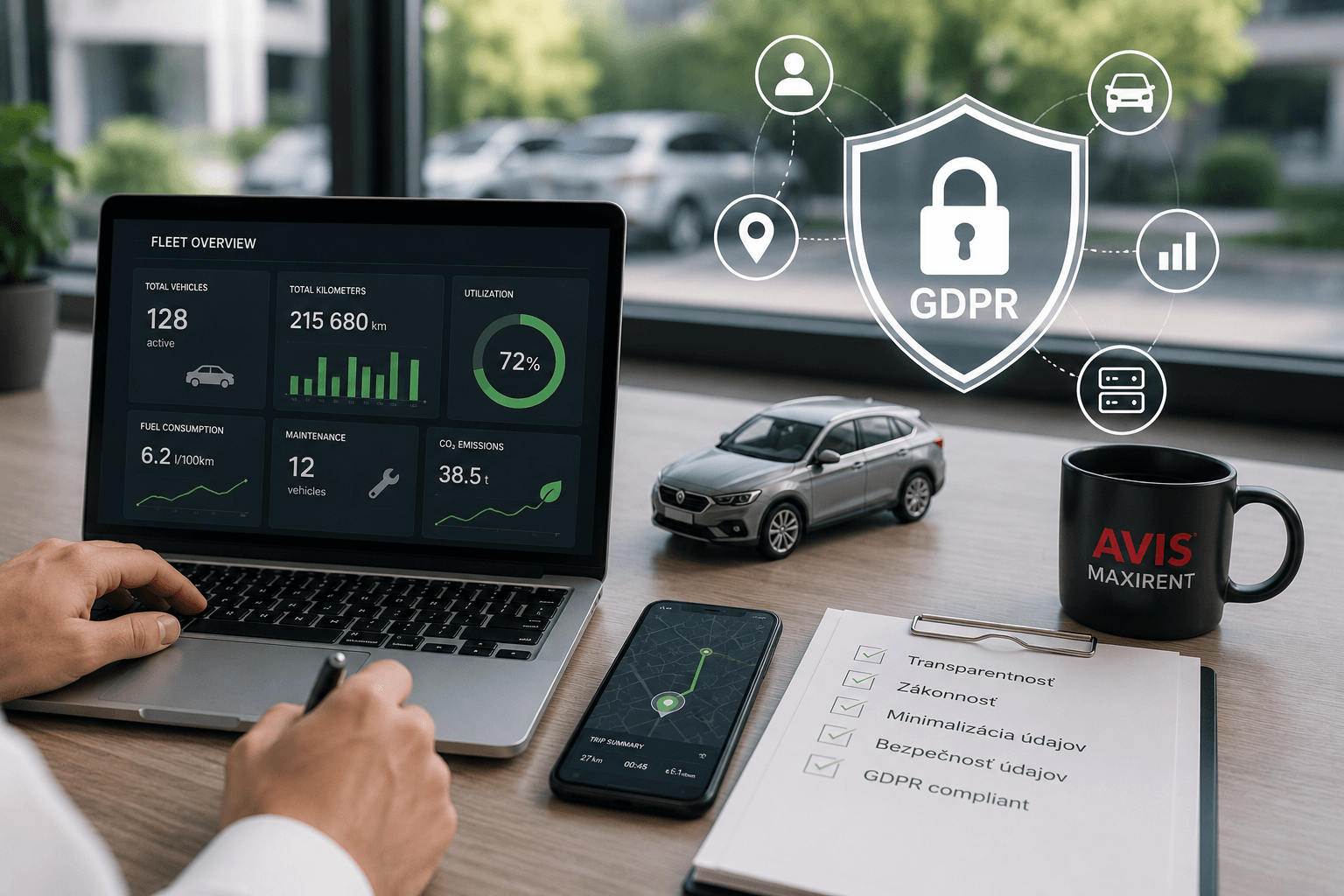
In this article, we’ll look at how fleet data can be used responsibly, what principles the GDPR establishes for vehicle monitoring, and how to set up processes so that they benefit both the company and its employees.
Why Fleet Data Is Important for Modern Fleet Management
Every company vehicle generates a wealth of data that helps improve the performance of the entire fleet.
Most commonly, this includes data on:
- mileage,
- vehicle usage,
- fuel or energy consumption,
- service schedules,
- operating costs,
- and vehicle usage time.
This fleet data enables managers to make decisions based on facts rather than estimates. It allows for better fleet renewal planning, cost optimization, and the identification of inefficient vehicle usage.
However, it is important to distinguish between vehicle data and the driver’s personal data.
What the GDPR Says About Vehicle Monitoring
The GDPR does not prohibit the monitoring of company vehicles. However, it sets out clear rules governing the processing of personal data.
When monitoring vehicles, the following principles must be observed in particular:
- process data only for a specific purpose,
- collect only necessary information,
- ensure adequate data protection,
- inform employees transparently,
- determine the data retention period.
Therefore, monitoring must not be used for the inappropriate surveillance of employees, but rather for fleet management, security, or the protection of company property.
How to Set Up Vehicle Monitoring in Compliance with the GDPR
Properly configured monitoring strikes a balance between the company’s needs and the protection of employees’ privacy.
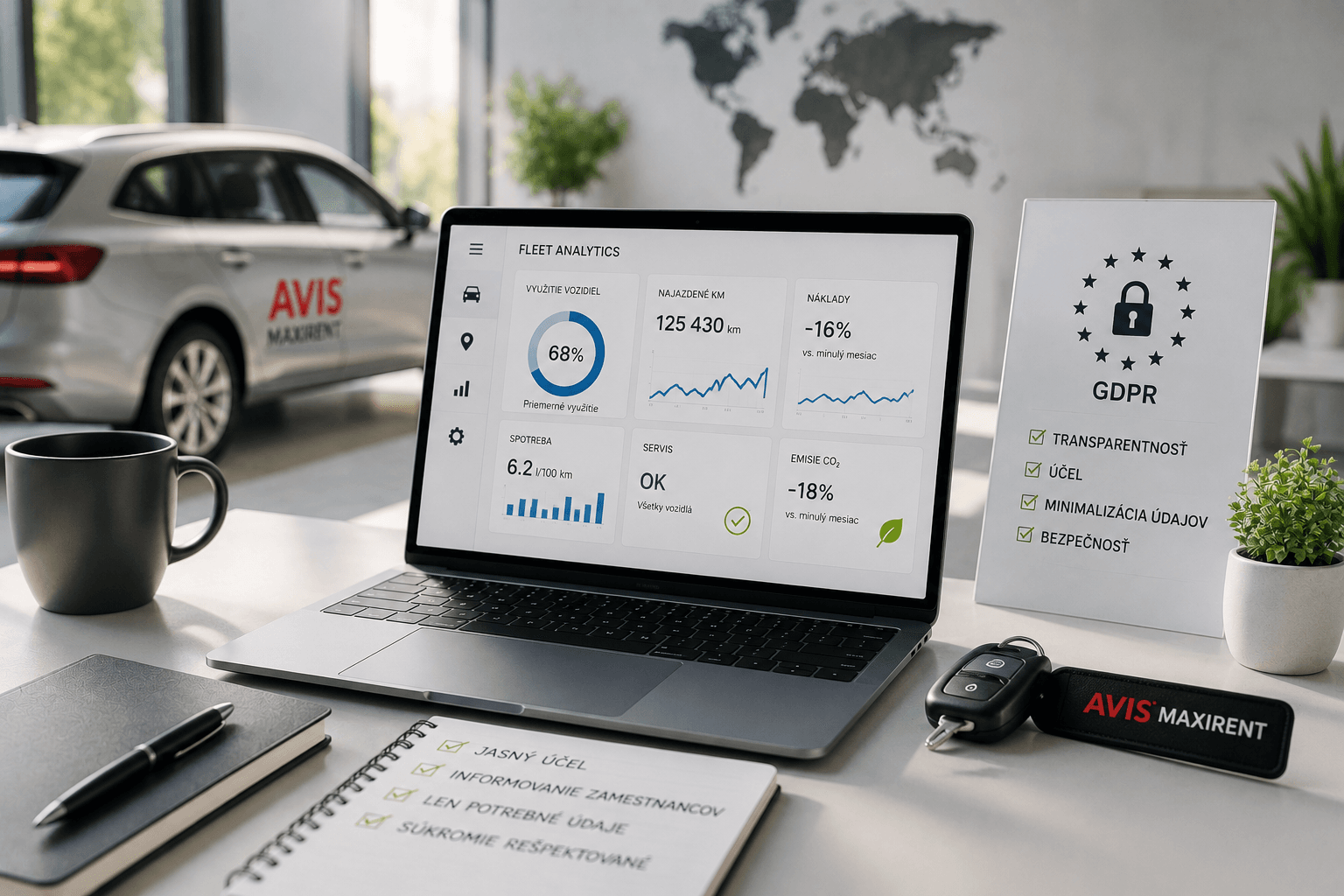
Define a clear purpose
Every company should be able to answer the question of why it collects data.
The most common reasons are:
- optimizing vehicle utilization,
- scheduling maintenance,
- protecting company assets,
- tracking business trips,
- improving safety.
If the purpose is not clearly defined, monitoring can be problematic from a personal data protection perspective.
Inform Employees
Transparency is one of the fundamental principles of the GDPR.
Employees should know:
- what data is being collected,
- why it is being collected,
- who has access to it,
- how long it is retained,
- what their rights are.
Open communication also builds trust in company processes.
Collect only the necessary data
Not all available data is necessary.
In most cases, it is sufficient to track:
- mileage,
- vehicle usage,
- service intervals,
- fuel consumption,
- operational statistics.
If a specific piece of data does not add value to fleet management, collecting it may not be justified.
Fleet data without infringing on employee privacy
Modern fleet management systems offer several ways to analyze the fleet without unduly monitoring individuals.
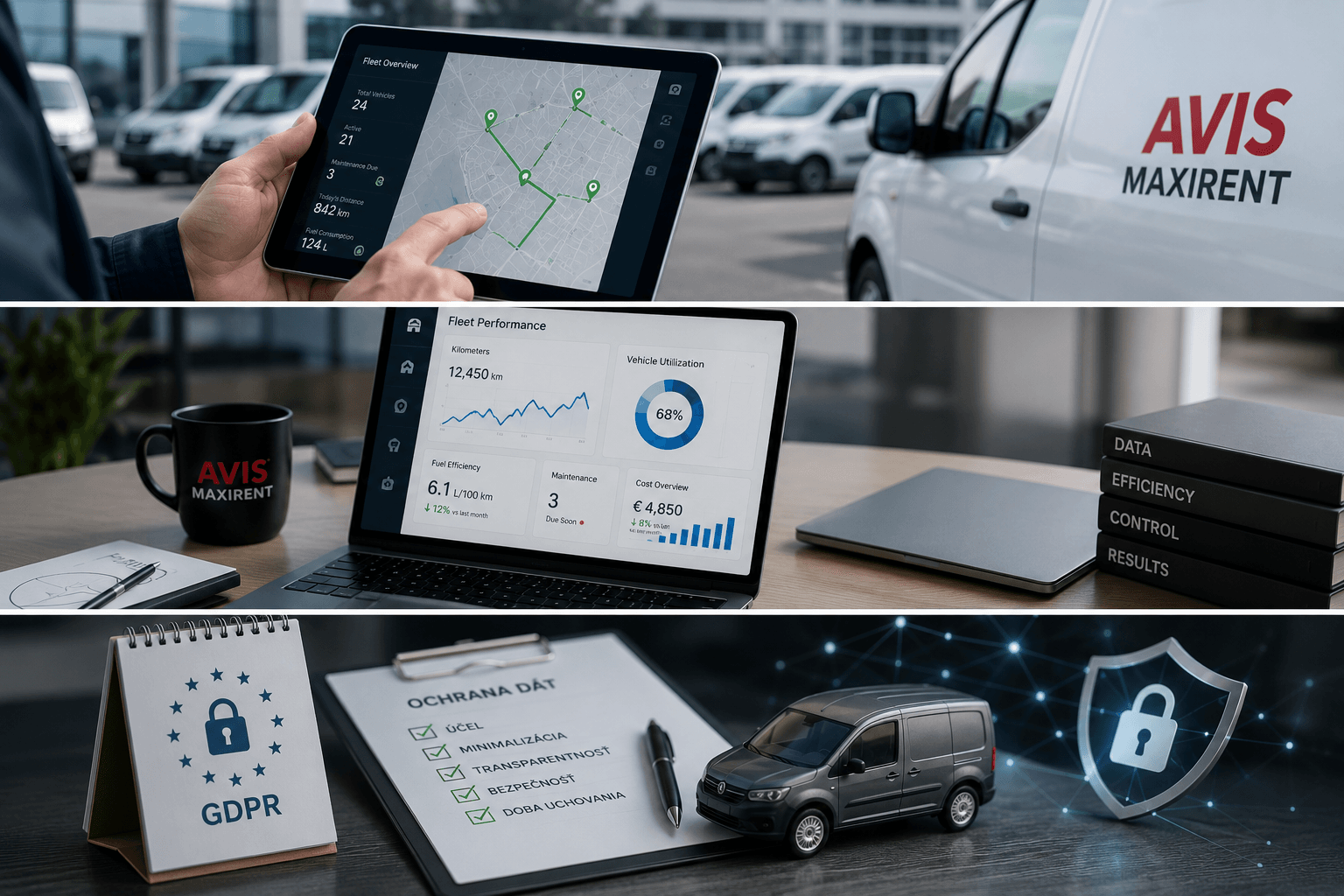
The most common solutions include:
Aggregated statistics
Managers can work with data for entire departments or groups of vehicles instead of tracking individual employees.
This approach helps identify trends without infringing on privacy.
Separation of personal and business trips
Many GPS systems allow users to mark a trip as personal.
During a private trip:
- the route is not displayed,
- location data is limited,
- the company records only essential operational information.
This solution significantly reduces the risk of infringing on employees’ privacy.
Anonymized reports
Anonymized data is often sufficient for strategic analyses.
Management can monitor:
- average fleet utilization,
- total fuel consumption,
- service costs,
- vehicle occupancy,
- overall operational trends.
Without the need to identify a specific driver.
What Are the Benefits of Properly Configured Monitoring?
If monitoring is set up transparently and in compliance with the GDPR, it brings benefits to the entire organization.
These include:
- more efficient use of vehicles,
- lower operating costs,
- simpler service scheduling,
- greater fleet safety,
- better fleet renewal planning,
- higher-quality data-driven decision-making.
Monitoring thus ceases to be a tool for control and becomes a tool for management.
Common Mistakes in Vehicle Monitoring
Many companies make similar mistakes that can lead to a loss of employee trust or complications with data privacy.
The most common ones are:
- an unclear definition of the purpose of monitoring,
- a lack of internal guidelines,
- insufficient employee notification,
- retaining data longer than necessary,
- collecting data that the company does not actually use.
Prevention is easier than solving the resulting problems.
The future of fleet data is moving toward intelligent analytics
Fleet management is gradually shifting from tracking individual trips to intelligent data analysis.
The following will become increasingly important:
- predictive analytics,
- automated reports,
- AI-driven fleet utilization analysis,
- data-driven cost optimization,
- integration of fleet systems with other corporate applications.
The future, therefore, will not be based on more intensive monitoring of employees, but on more effective use of high-quality data.
Conclusion
Modern vehicle monitoring does not have to mean an invasion of employee privacy. If a company adheres to GDPR principles, transparently communicates the purpose of data processing, and uses fleet data primarily to optimize its fleet, it can gain valuable insights without undermining employee trust.
Properly configured fleet management today is based on data, not on constant monitoring of people. Companies that can strike a balance between efficiency and the protection of personal data will be prepared for the further development of digital mobility.
FAQ
Is the monitoring of company vehicles compliant with the GDPR?
Yes. Monitoring is permitted if it has a clear purpose, is proportionate, transparent, and meets the GDPR’s requirements for the processing of personal data.
What fleet data can a company track?
Most commonly, this includes mileage, vehicle usage, fuel consumption, service intervals, and operating costs.
Does a company have to inform employees about monitoring?
Yes. Employees must be informed about the scope of monitoring, the purpose of data processing, and their rights.
Is it possible to track a vehicle without infringing on privacy?
Yes. Modern systems allow for anonymized reports, aggregated statistics, or a private-drive mode.
Why is fleet data important?
It helps optimize costs, plan maintenance, use vehicles more efficiently, and make decisions based on real data.
TL;DR
- The GDPR allows for vehicle monitoring while complying with legal regulations.
- Fleet data helps optimize fleet utilization and reduce costs.
- Transparent communication with employees is the foundation of trust.
- Modern systems allow for vehicle analysis without undue intrusion into privacy.
- The future of fleet management lies in intelligent analytics and effective data management.