
New Car Delivery Times in 2026: How to Optimize Fleet Refresh Without Downtime

The year 2026 brings new challenges for corporate fleets. Although the situation has stabilized significantly following a period of global supply chain issues
, delivery times for new cars in 2026 remain a key factor in planning fleet renewal. While automakers have increased production capacity and improved component availability, differences between individual brands, powertrains, and trim levels can still be significant.
If a company waits too long to order vehicles, it may find itself in a situation where its old cars reach the end of their service life before the new ones arrive. This often results in higher operating costs, complications for employees, or the need for unplanned vehicle rentals.
In this article, we’ll look at how the supply chain in the automotive industry works today, how automotive production affects the availability of new vehicles, and how to properly plan fleet renewal so your company can minimize downtime and unexpected costs.
Delivery times for new cars in 2026 are shortening, but planning remains crucial
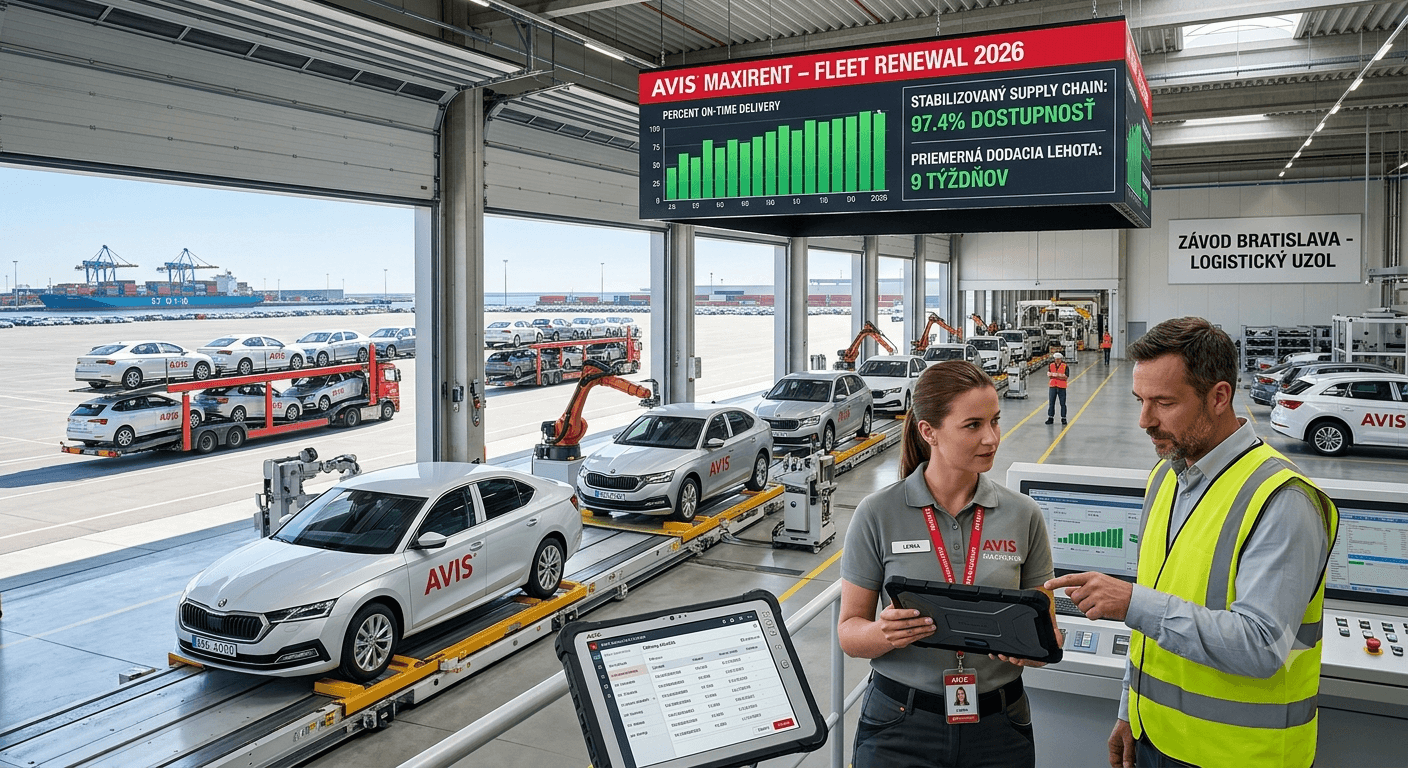
The biggest problems caused by the pandemic, semiconductor shortages, and disruptions to logistics routes are now largely a thing of the past. However, that doesn’t mean all vehicles are available immediately.
Delivery times are currently influenced by several factors:
- the production capacities of individual automakers,
- the availability of specific engines,
- demand for hybrid and electric vehicles,
- the individual configuration of the vehicle,
- logistics between the manufacturing plant and the importer.
As a result, companies can no longer expect new vehicles to be delivered within a few weeks without prior planning.
What is the good news for fleet managers?
Compared to the years 2021 through 2023, production processes are significantly more stable. The automotive sector has invested in supplier diversification, production digitization, and better inventory planning, which reduces the risk of major disruptions.
How the Supply Chain Affects Fleet Renewal
A modern supply chain is a complex network of component manufacturers, logistics companies, automakers, importers, and dealers. If a problem arises at any point in the chain, it can affect a vehicle’s delivery date.
The most common causes of extended delivery times include:
- limited production of specific components,
- increased global demand for certain models,
- logistical complications in maritime or rail transport,
- seasonal shutdowns at manufacturing plants.
For companies planning fleet renewal, it is therefore advisable to prepare for fleet renewal well in advance.
Why It’s Not Enough to Just Track the Delivery Date
The actual timeline involves several steps:
- budget approval,
- model selection,
- ordering vehicles,
- manufacturing,
- transport,
- registration,
- delivery to employees.
Each of these steps can affect the date a vehicle is put into service.
Automotive manufacturing is changing faster than ever before
Today’s automotive manufacturing is significantly more flexible than it was a few years ago. Automakers are investing in automation, intelligent production planning, and more efficient inventory management.
At the same time, however, the complexity of the vehicles themselves is increasing. Modern cars contain hundreds of electronic control units, advanced safety systems, and sophisticated infotainment solutions. Every technological innovation places greater demands on the manufacturing process.
This means that even though production is more stable, the availability of certain configurations may still be limited.
Customization Extends Production Time
The more specific requirements a company selects when placing an order, the higher the likelihood of a longer production lead time.
The most common examples include:
- non-standard colors,
- special interiors,
- custom equipment packages,
- less common engine options.
How to Prepare for Fleet Renewal Without Downtime

Successful fleet renewal doesn’t start with ordering vehicles, but with a thorough analysis.
Practical Steps
1. Evaluate your current fleet
Identify vehicles with high maintenance costs or those nearing the end of their lifecycle.
2. Set renewal priorities
Not all vehicles need to be replaced at once. Priority should be given to vehicles with the highest operating costs or the highest mileage.
3. Order in advance
Planning several months in advance creates room to handle unexpected situations.
4. Consider alternative solutions
For longer delivery times, long-term rental or operating leases may be a suitable solution.
Common Mistakes in Fleet Renewal Planning
Even experienced companies make mistakes that can significantly increase costs.
Mistake #1 – Last-minute ordering
If a company doesn’t start looking into new vehicles until after a lease expires or just before old vehicles are taken out of service, the scope for flexible solutions is significantly reduced.
Mistake #2 – Choosing Based Solely on Purchase Price
The lowest purchase price does not necessarily mean the lowest total cost over the vehicle’s lifetime.
Mistake #3 – Ignoring Operational Data
Telematics data, service history, and fuel consumption provide valuable insights into which vehicles should be replaced first.
Mistake #4 – Lacking a Plan B
If there is a delay in delivery, the company should have an alternative solution ready to prevent any disruption to operations.
Trends That Will Continue to Affect Delivery Times in the Coming Years
The automotive industry is undergoing a significant transformation.
Key trends include:
- a higher share of electric vehicles,
- the digitization of manufacturing processes,
- smart supply chain planning,
- greater automation of manufacturing plants,
- the use of data in corporate fleet planning.
Companies that keep pace with these trends and plan their fleet renewal for the long term will gain greater flexibility and better control over costs.
Conclusion
Although delivery times for new cars in 2026 are, in most cases, more favorable than they were a few years ago, successful fleet renewal still requires strategic planning. While a more stable supply chain and more modern automotive production reduce the risk of significant delays, differences between individual models and configurations remain.
Companies that plan their fleet renewal in advance, regularly assess the condition of their fleet, and use available data to inform their decisions, are able to minimize downtime, better control costs, and ensure seamless mobility for their employees even during periods of market volatility.
FAQ
How long are delivery times for new cars in 2026?
They depend on the manufacturer, model, engine type, and configuration. Some vehicles in stock are available immediately, while custom orders may take several months.
What does “fleet renewal” mean?
It refers to the planned renewal of a company’s vehicle fleet with the goal of reducing operating costs, improving safety, and maintaining smooth operations.
Why is the supply chain important when purchasing vehicles?
The supply chain affects production, logistics, and the availability of components. Its efficiency has a direct impact on the vehicle’s delivery date.
Does automotive production affect delivery times?
Yes. Production capacity, parts availability, and production planning all determine how quickly a vehicle reaches the customer.
How can you prevent disruptions when renewing your fleet?
The best solution is to plan fleet renewal well in advance, utilize operational data, and have a contingency plan in place in case of delivery delays.
TL;DR
- Delivery times for new cars in 2026 are more stable, but still require planning.
- The supply chain remains one of the main factors affecting delivery times.
- Automotive production is more efficient, but custom configurations can extend delivery times.
- Fleet renewal should be based on data analysis, not just the age of the vehicles.
- Ordering early helps minimize downtime and unplanned costs.
- Strategic planning increases the efficiency of the entire company fleet.