
Modern fleet reporting in 2026: from excel to AI fleet analysis
Modern fleet reporting in 2026: from excel to AI fleet analysis
Introduction: when "feeling" is no longer enough
Fleet managers in 2026 are dealing with a very different world than they were five years ago. Rising vehicle, service and fuel prices, pressure to reduce emissions, new VAT rules, hybrid working, and the expectation of employees to have a comfortable company car at the same time. Thousands of lines of data - GPS, fuel cards, service invoices, tolls, electric car charging.
Anyone working today with only excel and a monthly mileage report is at a disadvantage. Modern fleet reporting is built on data integration, automated reports and, increasingly, AI analytics that can spot trends, risks and savings opportunities before they appear on the income statement.
In this article, we look at what fleet reporting should look like in 2026, what data and tools a fleet manager should be familiar with, what savings telematics and AI can deliver, and how AVIS has grasped this topic in AVIS Lease, AVIS MaxiRent and AVIS Van solutions.
1. Why fleet reporting in 2026 can't be done "on the fly"
1.1 Corporate fleets as a big player in the economy
More than 250 million passenger cars and tens of millions of commercial vehicles are driven in the European Union. It is estimated that corporate and business fleets account for around 60% of all new car registrations in the EU and drive around twice as many kilometres as private cars. Corporate vehicles are therefore one of the biggest sources of both costs and emissions.
In Slovakia, company cars account for a significant share of new car registrations and a large share of kilometres driven in cities and on motorways. For many companies, mobility (cars, vans, servicing, fuel) is one of the top 3 cost items.
1.2 Changing environment: inflation, ESG, legislation, EVs
Fleet manager in 2026 must take into account in reporting:
- Inflation - rising prices of cars, servicing, tyres, insurance and fuel,
- ESG and CO₂ - pressure to measure and report company car emissions,
- electromobility - the mix of internal combustion cars, hybrids and EVs in the fleet,
- new tax and VAT rules - especially for cars and mixed use,
- safety and damage - rising costs of repairs after accidents,
- shortage of people - need for automation and simpler tools.
The result? Reporting is no longer an "add-on" to fleet. It's the main tool for managing TCO and deciding whether to expand, replace, downsize or change the mix of drives in a fleet.

2. What is modern fleet reporting (and what is no longer enough)
2.1 From excel to integrated reporting
Traditional model:
- Monthly mileage export,
- fuel costs from accounting,
- a few basic tables by license plate number.
Modern fleet reporting combines multiple data sources in one environment:
- Telematics/GPS - location, mileage, driving style, idle speed,
- fuel and charge cards - fuel, electricity, prices, refuelling locations,
- service systems - preventive maintenance, repairs, tyres,
- tolls and motorway charges,
- HR and attendance - assigning vehicles to drivers, type of position,
- internal economic systems - invoices, costs, centres.
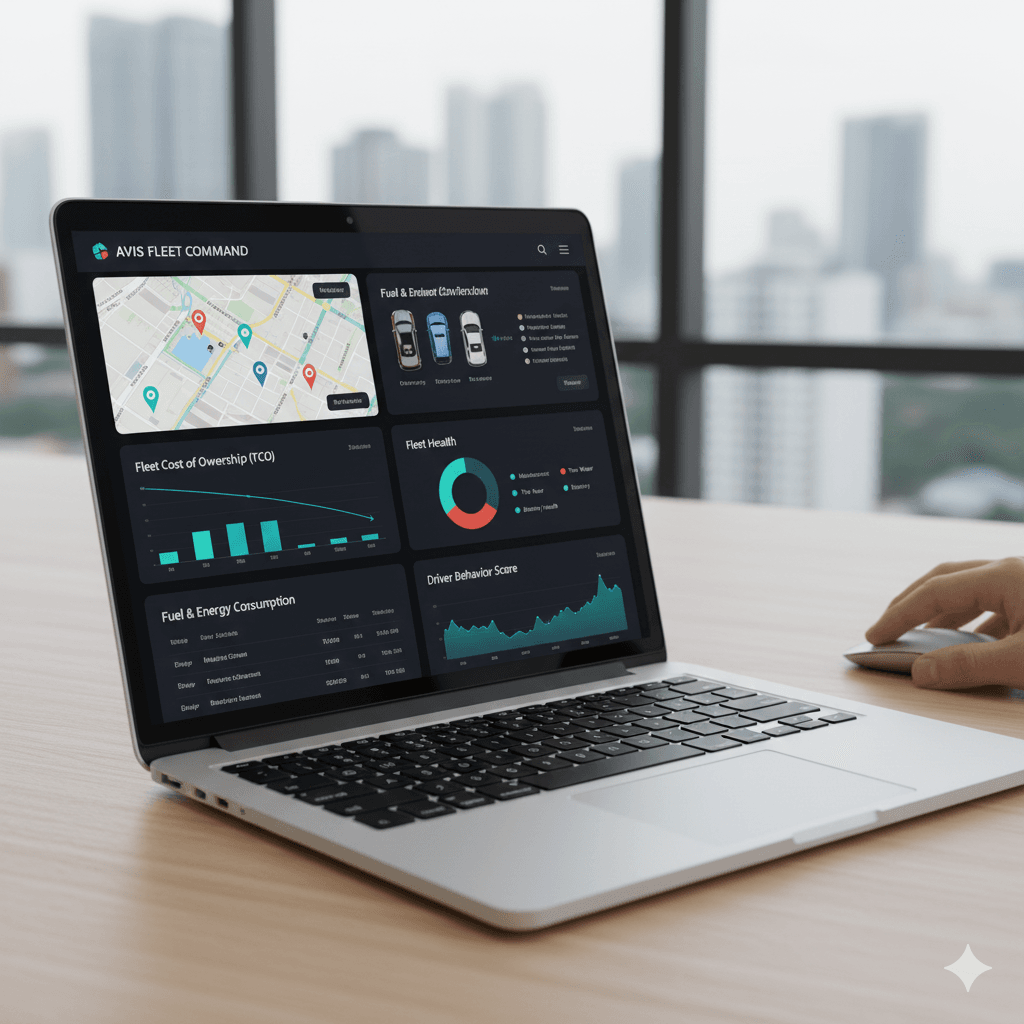
The result is one dashboard where the fleet manager and CFO can see:
- TCO per km/vehicle/centre,
- Vehicle utilization (percentage of time in motion vs. standing),
- top 10 "most expensive" cars,
- damage and accident statistics,
- CO₂ emissions by fleet and drive type.
2.2 Key KPIs that should not be missed
At a minimum, the following KPIs should be included in modern reporting:
- TCO per km - complete cost per km (financing, fuel, servicing, insurance, tyres),
- vehicle usage - mileage, number of days out of service, share of szolg vs. private trips,
- consumption and fuel efficiency - l/100 km, kWh/100 km, difference between drivers,
- safety - number of accidents per 1 million km, average damage per vehicle,
- CO₂ and emissions - g CO₂/km by category,
- policy compliance - over-riding, illegal refuelling, outside approved refuelling stations.
3. Markets and technologies: where is fleet reporting in 2026
3.1 Adoption of telematics and fleet software in Europe
The European market for fleet management and telematics is growing rapidly. According to market analysis:
- the number of active fleet management systems in Europe is growing at a double-digit rate and is expected to reach tens of millions of units by the end of the decade,
- the telematics software and services market in Europe is worth tens of billions of euros and growing at around 10% per year,
- in key countries such as Germany, France and the UK, more than 60% of medium and larger fleets use digital fleet software.
Although Slovakia lags behind Western Europe, the trend is clear - modern fleet reporting without telematics and software is the exception rather than the rule.
3.2 The numbers that convince CFOs
Available studies and case studies show that companies that use telematics and fleet data analytics are achieving:
- 10-15% fuel savings through route optimization, idling control and eco-driving,
- 16% reduction in combined fuel and labour costs when telematics is combined with journey planning,
- 20-40% reduction in accidents when using safety features (driving style monitoring, warnings, driver training),
- Significant reduction in unplanned downtime when predictive maintenance is deployed.
These percentages are real savings that translate into fleet TCO - and P&L.
4. How AI is changing reporting: from hindsight to prediction
4.1 Classic reporting vs. AI analysis
Classic reporting answers the question "what happened":
- How much mileage we have driven,
- how much we spent on fuel,
- how many accidents we had,
- which car was the most expensive.
AI reporting and analytics answer the questions:
- where we have the potential to save,
- which cars have the highest risk of breaking down in the next few months,
- where it doesn't pay to extend the contract/life cycle,
- which drivers need eco-driving or safe driving training,
- which sections and routes are the riskiest.
4.2 Predictive maintenance and vehicle lifecycle
AI models can combine data from telematics (mileage, driving style, vibration, temperature), servicing and typical faults of a given model. Result:
- Early warning of the need for intervention before a failure occurs,
- scheduling of service during off-peak and critical periods,
- better decision-making on whether to replace or keep the vehicle after the end of the contract,
- reducing unplanned downtime and the cost of replacement vehicles.
4.3 AI in optimising routes and fleet utilisation
AI analysis can:
- Optimize the distribution of trips between vehicles,
- combine multiple stops into more efficient routes,
- identify cars that are unused for long periods of time,
- suggest moving a car to another centre where it would be better utilised.
The result is lower cost per km and better use of the existing fleet without immediately buying new cars.
4.4 AI and CO₂ reporting
Many companies already have to, or will soon have to, report CO₂ from their fleet:
- AI can recalculate emissions by drive type, consumption and driving profiles,
- suggest scenarios for electrification of part of the fleet, estimating both CO₂ and cost savings,
- prepare the basis for ESG and CSRD reporting.

5. Practical guidance: how to build modern fleet reporting
5.1 Step 1: Audit data and KPIs
Start with a simple audit:
- What fleet data do you have today (format, frequency, source),
- what you are realistically reporting and to whom (management, HR, CFO, board),
- what decisions are you making based on the data and where are you still "guessing".
Then define 5-10 key KPIs you want to have in one report - e.g. TCO/km, car usage, fuel consumption, accidents per million km, fleet CO₂.
5.2 Step 2: Select a system and a partner
When choosing a fleet reporting solution, think about:
- the possibility to integrate telematics, fuel cards, service and accounting,
- clear dashboards for both the fleet manager and the CFO,
- Exports to Excel, PDF, and APIs for interfacing with internal BI tools,
- flexibility (different car segments, different countries, different products - leasing, rental).
A partner like AVIS can deliver not only vehicles, but also portals and reporting tools that are already interfaced with its internal systems.
5.3 Step 3: Pilot project and iteration
There is no need to revolutionize the entire fleet at once. Start with the pilot:
- Choose a part of the fleet (e.g. 20-50 cars),
- Deploy telematics and reporting,
- track KPIs for 3-6 months,
- evaluate real savings and feedback from drivers.
Based on pilot results, expand and adjust fleet policy.
5.4 Step 4: Link to CFO and top management decision making
Fleet reporting should not end in an email attachment. Ideal state:
- A regular monthly dashboard for senior management,
- "what if" scenarios (what if we reduce the fleet by 10%, what if we replace 20% of the cars with EVs, what if we shorten the life cycle from 5 to 4 years),
- link to CAPEX/OPEX planning and the company's investment plan.
6. Modern reporting in AVIS solutions
6.1 AVIS Lease and AVIS MaxiRent - data and insight included in the price of the service
In Slovakia, AVIS provides the following for operating leases and medium-term rentals:
- Online portals for B2B clients,
- reports on leases, mileage, servicing and damage,
- cost reports by vehicle, branch and centre,
- data export option for custom BI solutions.
Fleet managers do not have to manually collect information from different sources - they have it in one system.
6.2 AVIS Van and Commercial Vehicles
For vans and commercial vehicles (AVIS Van), reporting is even more important:
- High mileage,
- sensitivity to breakdowns (logistics, delivery),
- frequent mix of internal combustion cars and electric vehicles.
AVIS can set up telematics, reporting and service for such a fleet to minimize downtime and optimize routes.
6.3 AVIS + AI and telematics collaboration
AVIS is open to integrations with telematics and AI solutions to enable clients to:
- link data from AVIS systems with their own BI tools,
- use advanced analytics for predictive maintenance,
- prepare ESG and CO₂ reports based on real data.
Frequently asked questions (FAQ)
1. What is the difference between "tracking" and modern fleet reporting?
"Tracking" just means tracking vehicle location and basic data. Modern fleet reporting combines GPS, fuel, service, insurance and costs into a single unit and can answer questions about fleet TCO, efficiency and CO₂.
2. Does AI reporting make sense even for a smaller fleet (e.g. 20 cars)?
Yes. With 20 cars, every unnecessary accident, repair or poorly set up lifecycle will already have a significant impact on costs. AI tools today are not just for "megafleets" - choosing the right solution is important.
3. How much can I realistically save by deploying telematics and reporting?
Experience and studies show that companies routinely achieve 10-15% fuel savings and double-digit reductions in accidents. For a fleet of tens of cars, this is tens of thousands of euros per year.
4. What about GDPR and driver tracking?
It's important to have a clear internal policy, keep employees informed and use data appropriately. Most modern solutions allow to anonymize data or display only necessary indicators (e.g. driving style without a detailed map of out-of-hours movements).
5. Do I need my own IT team for modern fleet reporting?
Not necessarily. Many solutions (including AVIS portals) work as a cloud service that a fleet manager can use without deep IT knowledge. However, an IT department is important when integrating with internal systems and BI.
Summary / TL;DR - key learnings
- Fleet reporting in 2026 needs to work with data from telematics, fuel cards, service and accounting - excel alone is no longer enough.
- Telematics and analytics routinely deliver 10-15% fuel savings and significant reductions in accidents and downtime.
- AI is transforming reporting from a "rear view mirror view" to a predictive tool - you see risks and savings opportunities before they show up in costs.
- Modern reporting is a key tool for both the fleet manager and CFO when making decisions about fleet size, drive mix and vehicle lifecycle.
- AVIS brings companies not just cars, but portals, reporting and the ability to connect with advanced analytics tools.
Keywords and entities
Main keywords:
- Reporting
- fleet reporting
- fleet analysis
- data analysis
- AI
- artificial intelligence
- telematics
- TCO
Related entities and terms:
- AVIS, AVIS Lease, AVIS MaxiRent, AVIS Van
- fleet manager
- company fleet
- GPS monitoring
- CO₂ reporting, ESG, CSRD
- operating lease, long-term lease
- predictive maintenance
- dashboard, KPI
Featured images and ALT texts
- Fleet dashboard on laptop screen
- ALT (EN): "Fleet manager tracks modern fleet reporting on online dashboard"
- ALT (EN): "Fleet manager monitoring modern fleet reporting on online dashboard"
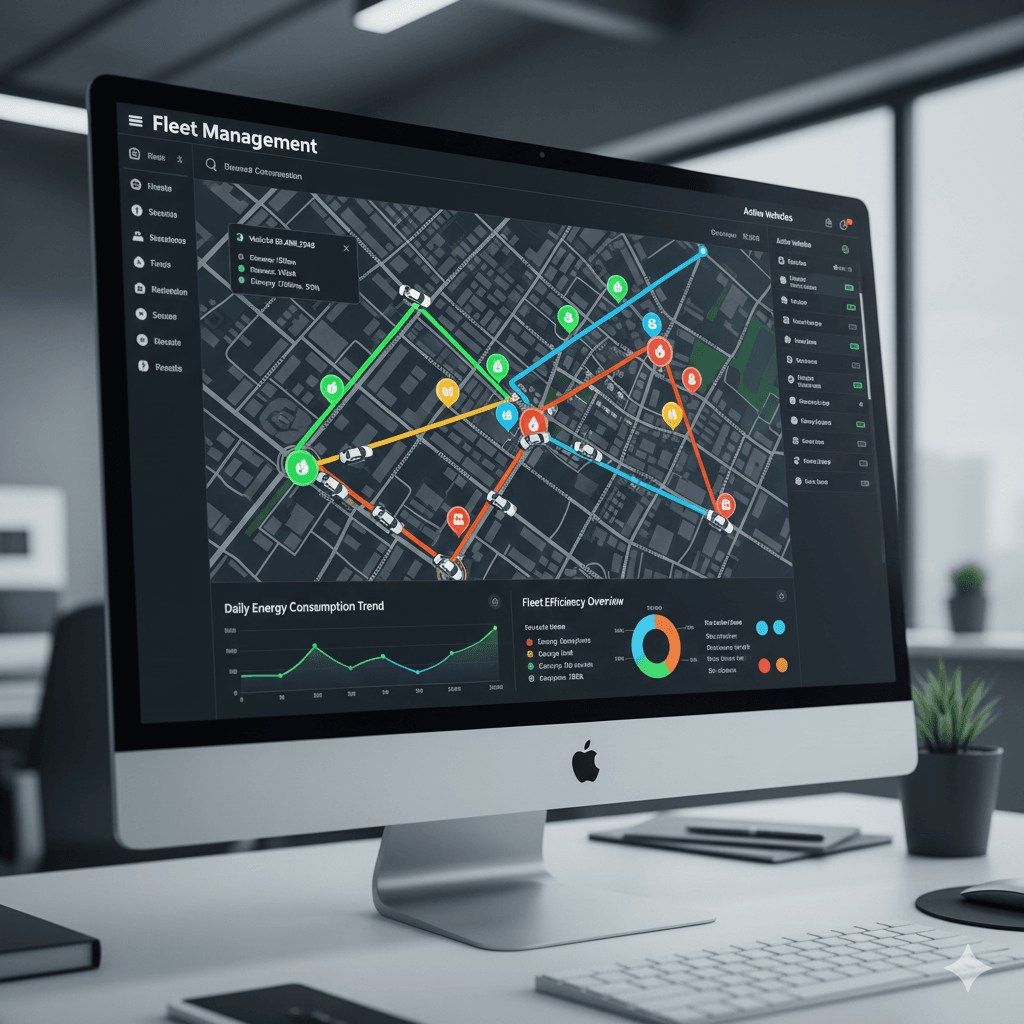
- Map with vehicle routes and consumption indicators
- ALT (SK): "Map of company car routes with fuel consumption and TCO per km displayed"
- ALT (EN): "Map of company vehicle routes showing fuel consumption and TCO per km"
- Diagram of the telematics, fuel card and service connection
- ALT (EN): "Schematic of integration of telematics, fuel cards and service data into fleet reporting"
- ALT (EN): "Diagram of integrating telematics, fuel cards and service data into fleet reporting"
- Illustration of AI over a fleet of vehicles (car icons + brain/AI icon)
- ALT (SK): "AI analysis of fleet data helps optimize costs and maintenance"
- ALT (EN): "AI fleet data analytics helping optimize costs and maintenance"
- AVIS vehicles and fleet manager in meeting with CFO
- ALT (SK): "Fleet manager and CFO discuss AVIS fleet cost report"
- ALT (EN): "Fleet manager and CFO reviewing AVIS fleet cost report"
Conclusion and call to action
Modern fleet reporting in 2026 is much more than a pretty spreadsheet. It is a strategic tool that decides whether the fleet is making the company money or quietly and slowly depriving it of profit. Those who control the data control the TCO - and can respond flexibly to inflation, fuel price changes, legislation and pressure to reduce emissions.
If you want to take fleet reporting to the next level, get in touch with AVIS. We can help:
- Gain visibility of current costs and KPIs,
- set up reporting and dashboards for both fleet manager and CFO,
- connect your fleet with telematics and data tools,
- set up a mix of operating leases and rentals to make the fleet efficient and sustainable.
👉 Contact us via avis.sk, avislease.sk or avismaxirent.sk to arrange a consultation on modern fleet reporting for your company.
Resources used (selection)
- ACEA - Vehicles in Use Europe, EU fleet statistics.
- Transport & Environment - briefing on company fleets and their share of new registrations.
- European Fleet Management and Telematics Market Analysis (Market Reports 2024-2025).
- Studies on the impact of telematics and AI on fuel economy, accident reduction and predictive maintenance.
- Experiences and materials from AVIS Lease, AVIS MaxiRent and AVIS Van solutions in Slovakia and Europe.