
How AI predicts breakdowns on commercial vehicles (LCVs) and reduces downtime
In logistics, there is a simple rule: a stationary vehicle does not stall. For commercial vehicles (LCVs - vans, vans), a breakdown usually does not occur "out of the blue". Small signals appear first - deviations in temperatures, pressures, error codes, changed engine or battery behaviour. AI diagnostics can pick up these signals before they turn into downtime. The result: fewer unplanned breakdowns, better scheduled service, higher fleet availability, and improved TCO.
In this article, I'll explain how predictive maintenance works in practice, what data it needs, what solutions exist (OEM vs. independent telematics), and what a logistics company needs to know when it wants to get started with AI.
Why failure prediction in logistics is so important (specific data)
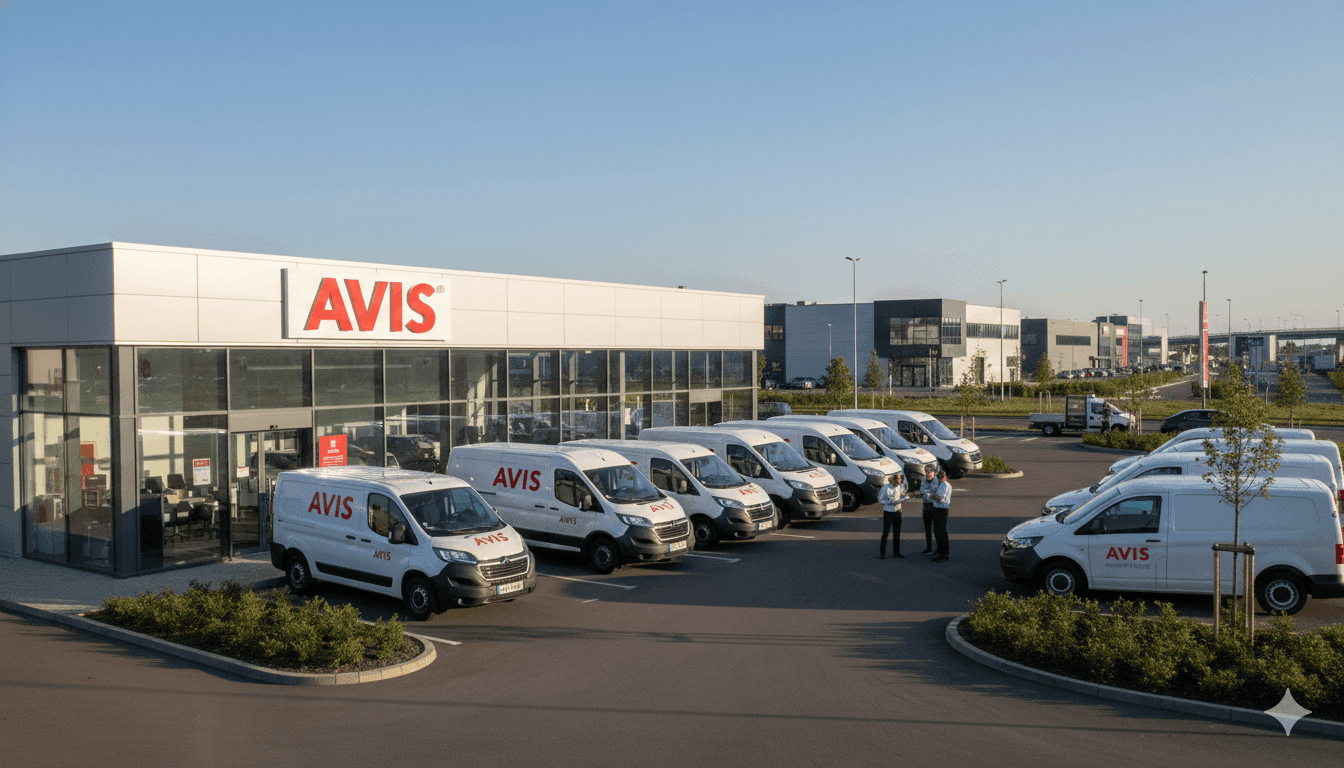
Logistics is growing - the pressure on fleet availability is growing too
Road freight transport is huge in the EU: billions of tonnes and thousands of billions of tonne-kilometres per year. This means high fleet utilisation and sensitivity to downtime.
Slovakia - rapid growth in road transport performance
Slovakia has often appeared among the countries with stronger growth in road transport statistics in recent years. For logistics companies, this practically means higher pressure on capacity and a higher cost of downtime (delays, replacement vehicles, transfers, penalties).
Age of vehicles in the EU - higher risk of breakdowns
The average age of vans (LCVs) in the EU is around 12+ years. Older vehicles generally have a higher risk of breakdowns and higher servicing costs - which makes it all the more sense to diagnose, plan and reduce unplanned downtime early.
What is AI diagnostics and what is predictive maintenance (not to confuse the terms)
In practice, 3 terms are often conflated. In the car/fleet world it makes sense to differentiate:
- Diagnostics (reactive): failure happens → we address the cause. Typically "a light came on".
- Preventive maintenance: service by time or km (e.g. intervals), regardless of the real condition.
- Predictive maintenance (AI/ML): service according to real condition and probability of failure. Goal: repair "at the right time" - not too early (unnecessary cost) nor too late (downtime).
AI diagnostics is a broader term: it can include both prediction (probability of failure), and recommendation of action (what to do), and scheduling of service (when and where).
How AI predicts faults on LCVs - step by step

1) Data collection: no data, no prediction
The most common data sources in the LCV fleet:
- Vehicle telematics/connectivity (OEM or aftermarket unit)
- OBD/CAN data: trouble codes (DTC), rpm, temperatures, pressures, battery voltage, DPF regeneration, etc.
- Service history: what has been repaired, when, at what mileage
- Operating data: driving style, routes, load, idling, cold starts
- External factors: season, temperatures, type of traffic (city vs. highway)
Practical logistics tip: start with what you already have. Many fleets have at least a basic telematics output, service invoices and ramp-ups.
2) Cleaning and "translating" data into signals
An AI model doesn't need raw spreadsheets - it needs signals (features), e.g.:
- Coolant temperature trend under load,
- fuel consumption deviation from typical profile,
- DPF regeneration frequency,
- battery voltage fluctuations,
- Repeated "soft" DTCs prior to failure.
This is often where the greatest added value arises: the model looks for patterns not seen by humans in operation.
3) Model learning: from anomalies to failure probability
In practice, a combination of approaches is used:
- Anomaly detection: "something is different" (useful when you don't have many flagged faults)
- Fault classification: prediction of a specific type of problem (e.g. battery, DPF, turbo)
- Time-to-failure/survival analysis: estimation of "how long it will take" for the problem to occur
- Sequential models: accounting for evolution over time (typical in telematics)
4) Action: alert + recommendation + plan
The best solutions don't end with an "alert". The key is in logistics:
- Prioritization (critical vs. non-critical),
- recommended action (what to check, what to order),
- Planning (when to shut down the vehicle to make it hurt the least),
- connection to service (ordering appointment, parts, spare vehicle).
What AI can typically predict on LCVs (most common examples)
Motorisation and emission systems

- DPF (regeneration, fouling)
- EGR (fouling, temperature deviations)
- turbo/pressure deviations
- Cooling system (temperature trends)
Battery, starting, electrics
- Battery fading (voltage, charging)
- alternator/recharging
- Moisture and vibration related electronic faults
Brakes and chassis
- uneven wear of brake components
- Vibration and misalignment (indication of chassis problems)
Tyres
- Indirectly through driving style, overloading, pressure deviations (if you have TPMS data)
Important: AI is not a substitute for mechanics. AI reduces the "signal to decision" time and reduces the number of failures that take you by surprise.
Comparison of solutions: OEM vs. independent telematics vs. fleet platform
OEM solutions (vehicle manufacturer)
Examples of approaches you will encounter: digital diagnostics, service alerts, critical condition monitoring.
Pros:
- Deep vehicle data (sometimes more than aftermarket)
- connection to authorized service and workflow
Minuses:
- with mixed fleet (multiple brands) multiple systems are created
- Often weaker "cross-brand" analytics and uniform reporting
3) Fleet platforms (building on top of data)
The point is to unify data, have unified KPIs, service planning, TCO control and processes.
What to ask when choosing (practical questions):
- What data are you taking from the vehicle? (DTC, temperatures, battery, DPF...)
- Can you do time-to-failure prediction or just alerts?
- What does the workflow look like after an alert? (deadline, parts, spare vehicle)
- Who owns the data and how easy is it to export?
- How do I connect this to our TMS/ERP and reporting?
What is the real benefit: cost, downtime, lifetime (investment view)
Predictive maintenance is typically advocated across 3 items:
1. Downtime: fewer unplanned failures and better downtime planning.
2. Service costs: fewer "unnecessary" replacements and better timing of repairs.
3. Lifetime and residual value: more consistent service status and less resale risk.
Significant reductions in downtime and increases in machine life are often cited in industry when predictive maintenance is deployed. In logistics, the essence is the same, only the "machine" is the vehicle and the cost of downtime is often more visible (delays, replacement solutions, reputation).
CFO logic: AI diagnostics pays off not by "we have a nice dashboard" but by:
- it reduces the number of interventions on the road,
- reduces the number of days out of service,
- reduces penalties and replacement costs,
- stabilizes TCO.
How to get started with AI diagnostics in logistics (without chaos)
Step 1 - select 2-3 failure "use-cases" with the highest impact
Typically:
- DPF/EGR problems (in urban traffic)
- Battery and starting (winter season)
- cooling system / overheating
Step 2 - set "minimum viable data"
- Unique vehicle identifier
- mileage (at least monthly)
- service history (at least basic: date, type of repair)
- telematics (at least fault codes and basic operational data)
Step 3 - define the process after the alert
Without a process, the AI will only generate "noise". You need:
- Who assesses the alert,
- by what time it is resolved,
- how the service is scheduled,
- when a replacement vehicle is given,
- how success is measured (KPIs).
Step 4 - Measure results (90 days)
Recommended KPIs for Logistics:
- Number of unscheduled downtime / 100 vehicles
- average time out of service
- number of interventions on the road
- service costs per km
- proportion of 'critical' alerts that are confirmed
Trends for 2026: where AI diagnostics is moving
- More connectivity "from the factory": more vehicles send data automatically.
- More focus on workflow: AI + automatic ordering of service, parts, spare vehicle.
- Better cross-brand reporting: push for uniform KPIs for mixed fleets.
- Link to safety: driving style, damage risk, prevention.
- LCV electrification: battery health, charging, degradation - new diagnostic disciplines.
Frequently asked questions (FAQ)
1) Is AI diagnostics suitable for a smaller fleet (e.g. 10-30 LCVs)? Yes, if you have recurring routes and faults. Works best on 2-3 clear "use-cases" (DPF, battery, overheating).
2) Do I need my own data team? Not necessarily. More important is to have order in the data (vehicle names, service history) and a clear process after the alert.
3) What is the most common deployment error? Deploy a system without a process: alerts are not handled by anyone or are handled chaotically - then AI doesn't help.
4) OEM solution or aftermarket telematics? If you have a single-brand fleet, OEM can be an advantage. With a mixed fleet, a single (independent) solution with integrations is often more practical.
5) How quickly will I see results? The first benefits (fewer "surprises") will often show up in 1-3 months, especially for failures that are recurring.
6) Will AI replace service and mechanics? No. AI reduces the time from signal to decision and helps prevent downtime.
TL;DR (summary)
- AI diagnostics on LCVs uses telematics, fault codes and service history to predict faults.
- The biggest benefit in logistics is less unplanned downtime and more stable TCO.
- Select 2-3 failure use-cases and set up the process after the alert - otherwise noise will be generated.
- Compare solutions by data depth, workflow, integrations and data ownership.
- Trend 2026: more connectivity, more service automation and more EV/battery data.
Keywords and entities (used + related)
Main KW: AI diagnostics, LCV
Related KWs and entities: predictive maintenance, predictive maintenance, telematics, OBD, CAN bus, DTC codes, fleet management, TCO, downtime, service planning, service history, DPF, EGR, battery, Volvo Uptime, Mercedes-Benz Uptime, Ford Pro Telematics, MAN ServiceCare, Eurostat, ACEA, logistics, delivery, last-mile.
Conclusion
If you run a logistics delivery business, AI diagnostics is a practical way to reduce breakdowns, schedule service in advance and have vehicles running when you need them.
Want to reduce downtime and have spare LCVs available as needed? Get in touch. At AVIS, we can help with mobility for logistics - from flexible commercial vehicle rentals to longer-term solutions with service and support.