
Green fleets as a competitive advantage for modern companies
Green fleets as a competitive advantage for modern companies
Corporate mobility is under more pressure today than ever before. Clients, employees, banks and regulators expect companies to actively reduce their emissions and be able to report them transparently. A green fleet is no longer just a "nice ESG project" but a real competitive advantage that impacts brand, business and total cost of ownership (TCO).
In this article we will look at what green fleet actually means in practice, what solutions are available today, how it affects both corporate marketing and ESG reporting, and how AVIS (AVIS Lease, AVIS MaxiRent, AVIS Van Rental) can help companies in Slovakia take the next step forward.
Why it pays to address green fleet today
1. Transportation is under regulatory and public scrutiny
Transport is one of the largest emitters of greenhouse gases in the EU, and passenger cars account for a decisive share of road transport emissions. This means that corporate fleets are naturally 'in the spotlight' - whether it is emissions reporting, urban low emission zones or supplier sustainability assessments.
For marketing, CSR and top management, this has several implications:
- ESG is no longer a voluntary topic - more and more grande corporations are requiring emissions data (Scope 1 and Scope 3) from their suppliers and partners as well.
- A green fleet translates into a public brand image - whether your vehicles are driving around Bratislava or across the EU, a visibly greener fleet is an instant calling card for the company.
- Financing and insurance - banks, insurers and investors are increasingly taking ESG into account when pricing financing and insurance.
2. Corporate customers and employees are changing their expectations
Customers and talent alike look at how a company treats the environment when choosing a supplier or employer. For many brands, "greenwashing" has become a reputational risk - it is not enough to have a green logo, it is also necessary to have a green reality.
A green fleet can be:
- An argument in tenders - especially international corporate tenders,
- part of employer branding - a company car as a benefit that is modern, quiet, comfortable and greener,
- an element of CSR communication - concrete, measurable projects (e.g. switching 30% of the fleet to electric or hybrid drive).
3. Costs and risks are changing in favour of green solutions
With rising fuel prices, tightening emission standards and upcoming low emission zones in European cities, the risk that the conventional 'diesel fleet' will become more expensive and less flexible in a few years' time is increasing.
A green fleet brings:
- Lower operating costs per kilometre with the right driving profile,
- less maintenance for electric vehicles (no oil, fewer moving parts),
- better preparedness for future regulations and emission limits,
- lower reputational risk associated with high emissions.

What does "green fleet" mean in practice
Many companies think of a green fleet as 100% electric vehicles. However, the reality is more complex. For most companies, it is more efficient to consider a mix of technologies and behavioural change, rather than a one-off radical replacement of all cars.
A green fleet is not just about the type of powertrain
In particular, a green fleet includes:
- Lower CO₂ and local pollutant emissions per km,
- lower energy consumption (fuel or electricity),
- responsible vehicle specification (we do not overprice "unnecessarily large" cars),
- optimising mileage and utilisation - fewer parked cars, more sharing,
- transparent emissions and TCOreporting.
Practically, this means a combination:
- electric vehicles (BEVs) in city and regional fleets,
- plug-in hybrids (PHEVs) for managers with longer routes,
- conventional hybrids for mixed driving,
- modern combustion vehicles with the latest emission standards for specific applications (e.g. vans with high mileage),
- fleet digitisation - telematics, driving style monitoring, route planning.
Technological pillars of a green fleet
1. Electric vehicles (BEVs)
- Ideal for urban and suburban deliveries, service teams, shared pool vehicles,
- Quiet and comfortable ride, higher acceleration, positive effect on brand perception,
- also suitable for "employee car" programmes as a benefit, especially in combination with home or company charging.
2. Plug-in hybrids (PHEVs)
- Suitable for executives who regularly drive out of town,
- with the right company policy (mandatory charging, limiting pure combustion mode), can significantly reduce emissions,
- a good transition step for companies that do not yet dare to go full electromobility.
3. Low-emission combustion vehicles and commercial vehicles
- In some fleets, conventionally powered commercial vans will be essential for years to come,
- Here too, it is possible to choose the latest engines, optimise volume and performance, combine shorter contracts and flexible operating leases,
- electric vans are also gradually entering the market and are becoming increasingly interesting for urban deliveries.
Process pillars: it won't happen without behavioural change
Technology is only half the battle. The other half is setting rules and processes:
- A company car policy - clear rules for the selection of vehicle types, their use and charging,
- eco-driving training - driving style can reduce fuel or electricity consumption by tens of percent,
- pool vehicles and sharing - one well-used car instead of three underused ones,
- digital planning and telematics - real data on mileage, consumption, spare capacity.
This is where a partner like AVIS can be a strong player - bringing not only cars, but also process know-how, reporting and fleet policy setting.
ESG, sustainability and reporting: wherever the fleet "counts"
Fleet emissions under ESG (Scope 1 and 3)
For most companies, vehicles fall into Scope 1 emissions (for in-house vehicles) or Scope 3 (for outsourced transport). Thus, the fleet directly affects the overall carbon footprint of the company.
For the marketing and ESG team it is crucial to have:
- Accurate mileage, consumption and emissions data,
- the ability to easily generate year-on-year comparisons - how much emissions have been saved by replacing vehicles,
- linking to ESG reporting (CSRD, GRI, own ESG KPIs).
It is the operating leases and long-term rentals through AVIS that can make it easier:
- Telematics data collection,
- regular reports on mileage and consumption,
- overview of average fleet age, emission standards and drive type.
ESG metrics that every company should have under control
Recommended metrics for a green fleet:
- Average CO₂ emissions per km (g/km) for the entire fleet,
- % of low-emission vehicles (BEV, PHEV, hybrid),
- fuel/electricity consumption per km by vehicle type,
- fleet age and share of vehicles with the latest emission standards,
- emission savings compared to baseline (before fleet replacement).
If a company has this data under control, it can easily use it in ESG report, annual report, communication with customers and banks.
Green fleet as a marketing and employer branding tool
What customers see
For marketing and brand management, the fleet is often the biggest "mobile billboard" of the brand. Green Fleet enables:
- Communicate ESG commitments directly on the streets - through on-vehicle branding, complementary slogans and visuals,
- use the fleet in PR and content marketing - case studies, videos, articles on the transition to green mobility,
- differentiate from competitors - especially in B2B segments where the product offering is similar and the "soft factor" of trust is decisive.
A brand that has a visibly modern and environmentally friendly fleet is innovative, trustworthy and perceived by customers as a long-term sustainable partner.
What employees and candidates see
A company car - or the possibility of company mobility - is a key benefit for many. A green fleet can help HR and employer branding on several levels:
- A more attractive benefit - an electric car or modern hybrid is seen by employees as an "upgrade" over the conventional combustion version,
- value alignment - Generations Y and Z are more likely to notice if their employer is addressing sustainability in practice,
- wellbeing and comfort - quieter ride, smoother acceleration, ability to park in green zones.
When a company links an employee vehicle program to a clear sustainability strategy, it creates a compelling story for candidates and internal communications.
Investment insight: costs, risks and returns
Why a green fleet pays off financially
From a CFO and top management perspective, the key question is: How much will it cost and what will we get in return?
With the right fleet design, green solutions don't have to be the more expensive option. The decision:
- Total Cost of Ownership (TCO) - not just purchase or lease, but also fuel/electricity, service, insurance premiums, taxes, residual value,
- Car usage profile - an EV saves the most on urban cycles and regular mileage,
- quality of partner - ability to deliver the right mix of vehicles, set mileage, contract length and flexibility.
It is the operating lease and long term rental through AVIS that allows the combination:
- Modern low emission vehicles with regular renewal,
- predictable monthly costs without unexpected fluctuations for repairs,
- lower administration - insurance, servicing, tyre service, spare vehicles are handled by the partner.
Risk management and future regulations
The investment view is not only about costs, but also about risks:
- Future emission standards and possible emission charges,
- low and zero emission zones in cities,
- possible changes in taxation,
- reputational risk with a 'dirty' fleet.
The green fleet thus also acts as an insurance policy for the future - the company becomes more flexible and ready for further tightening of the rules.
How to get started: 6 steps to a green fleet with AVIS
For marketing, CSR and top management, it's important to have a simple, easy-to-understand plan. A practical approach might look like this:
- Audit your current fleet
- Map vehicle types, mileage, consumption, emissions and purpose of use,
- use data from the current leasing partner or ask AVIS for a preliminary analysis.
- Setting targets and KPIs
- e.g. increase the proportion of low emission vehicles to 30% within 3 years,
- reduce average fleet emissions by X g/km,
- Introduce transparent ESG reporting for mobility.
- Selection of an appropriate mix of solutions
- BEVs for urban and regional routes,
- PHEVs and hybrids for managers,
- modern vans for logistics,
- flexible leasing (AVIS MaxiRent) for pilot projects.
- Pilot project and internal communication
- Start with a smaller part of the fleet (e.g. 10-20 vehicles),
- collect data on costs, emissions and driver satisfaction,
- communicate results internally and externally.
- Scale up the project and integrate into ESG strategy
- Adjust vehicle mix, car policy and processes based on the pilot,
- link fleet reports to ESG and financial reports.
- Long-term partnership and continuous optimization
- Set up regular quarterly or semi-annual reviews with a partner (e.g. AVIS Lease),
- Respond to changes in business, legislation and technology.
AVIS solutions for green corporate fleets
AVIS has been operating globally since 1946 and has long been one of the leaders in mobility in Slovakia. With experience in short-term rentals, operating leases and flexible products, it can help companies turn green ambitions into concrete action.
Key solutions include:
- AVIS Lease - operating leasing for passenger and commercial vehicles, including electric and hybrid vehicles, with comprehensive service, insurance and telematics options.
- AVIS MaxiRent - flexible leasing of vehicles for periods of several months or longer, suitable for electro-mobility pilot projects, seasonal fleet reinforcement or temporary projects.
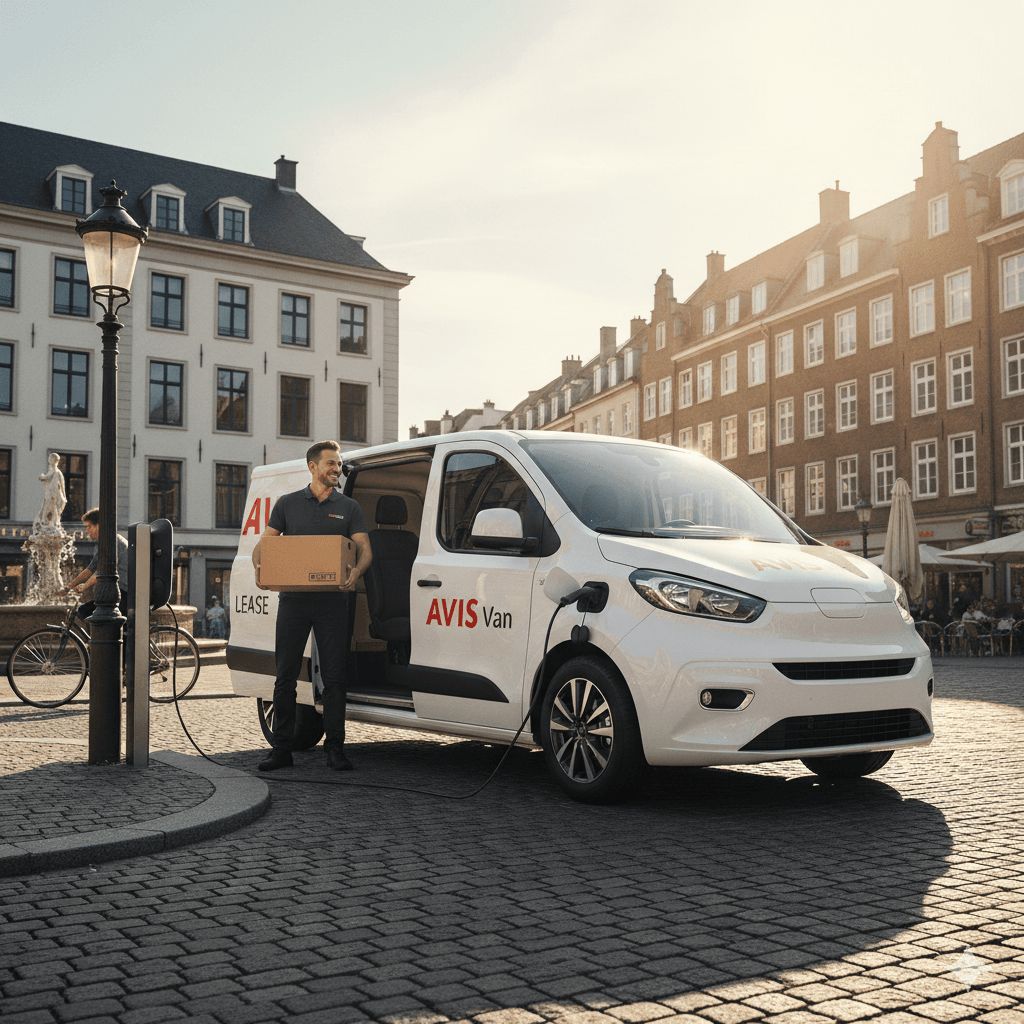
- AVIS Van / Commercial Vehicles - solutions for companies that need a reliable and progressively greener van fleet.
The common denominator is a comprehensive service, transparent costs and the possibility of a gradual transition to a greener fleet without large one-off investments.
Green Fleet Frequently Asked Questions (FAQ)
1. Is a green fleet worth it in Slovakia, where electromobility is still in its infancy?
Yes. Although the share of EVs in new registrations in our country is still lower than the European average, this gives companies a first-mover advantage. They can gain experience before the competition, take advantage of the image effect and prepare for future regulations.
2. Does the entire fleet have to be electric to be called "green"?
It doesn't have to. A green fleet is about progressively optimising the mix - a combination of BEVs, PHEVs, hybrids and advanced combustion vehicles. Measurable targets are important (e.g. proportion of low emission vehicles and reduction of average emissions), not 100% electrification at any cost.
3. What if we do not have our own charging infrastructure?
This is not an obstacle. Many companies are starting with fewer EVs and combining public charging with the gradual build-up of their own wallboxes at company headquarters or at selected employees' homes. A partner like AVIS can help you design a suitable model.
4. How can we incorporate the green fleet into marketing and CSR communications?
Data and stories are the foundation. Show concrete numbers - how many emissions you have reduced, how many vehicles you have replaced, how costs have changed. Combine this with stories from drivers, employees and clients. A combination of blogs, case studies, PR articles and social media is ideal.
5. What if legislation or technology changes quickly?
This is why operating leases and flexible products are preferable to outright ownership of vehicles for the long term. With shorter fleet renewal cycles, you can react more quickly to new technology, regulation and business needs.
6. How quickly can we see real cost and emissions benefits?
You can see the first results in costs and emissions after just a few months of the pilot - especially with higher mileage vehicles. It is important to collect data from the start, set KPIs and regularly evaluate the results together with your partner.
Summary
- A green fleet is a competitive advantage today - it impacts costs, ESG and brand reputation.
- It's not just about 100% EVs, but a mix of technologies and behaviour change - from BEVs and PHEVs to telematics and eco-driving.
- A properly configured fleet delivers lower TCO, lower emissions and better preparedness for future regulations.
- Marketing, CSR and HR know how to use green fleet in tendering, employer branding and PR.
- AVIS offers specific solutions (AVIS Lease, AVIS MaxiRent, AVIS Van) to enable companies in Slovakia to switch to greener mobility without extreme investments.
Keywords and entities used in the article
Main keywords:
- ecological fleet
- green fleet
- green mobility
- ESG
- corporate marketing
- sustainability
Related keywords and entities:
- corporate fleet
- operating leasing
- long-term vehicle leasing
- AVIS, AVIS Lease, AVIS MaxiRent, AVIS Van
- electric vehicles (BEV), plug-in hybrids (PHEV), hybrid vehicles
- CO₂ emissions, greenhouse gases
- ESG reporting, Scope 1 and Scope 3
- CSR, employer branding
- car policy, telematics, eco-driving
- TCO (Total Cost of Ownership)
Conclusion
Green Fleet is not a one-off campaign, but a long-term strategy that combines the financial, environmental and reputational dimensions of a company. If marketing, CSR and top management grasp it together, fleet can become a strong competitive advantage - not a cost that "we have to bear somehow".
If you're thinking about making the switch to greener mobility, start with a simple step:
- Audit your current fleet,
- define ESG and business objectives,
- Reach out to a partner who understands both mobility and the Slovak market.
AVIS in Slovakia offers solutions for small businesses, corporations and specific segments. Schedule a consultation and let the experts prepare a tailor-made proposal for a greener fleet - with clear numbers, a realistic plan and support for communication internally and externally.