
Fleet outsourcing vs in-house fleet management: a new view 2026
In 2026, corporate fleet management is entering a new phase. Rising vehicle prices, pressure on cashflow, ESG requirements, digitalization of processes and legislative changes are changing the perspective on what is more efficient for a company - in-house fleet management or fleet outsourcing. Whereas a few years ago, vehicle ownership was a symbol of stability, today more and more medium-sized companies are asking: do we need to own cars or do we want to use them efficiently?
The decision between in-house fleet management and outsourcing is no longer just about the price of the monthly instalment. It's about risk management, administrative burden, staff capacity, technological know-how and the ability to respond to changing market conditions. This article provides a comprehensive comparison of the two models from a 2026 perspective and will help you make a decision based on data, not emotion.
What in-house fleet management means in practice
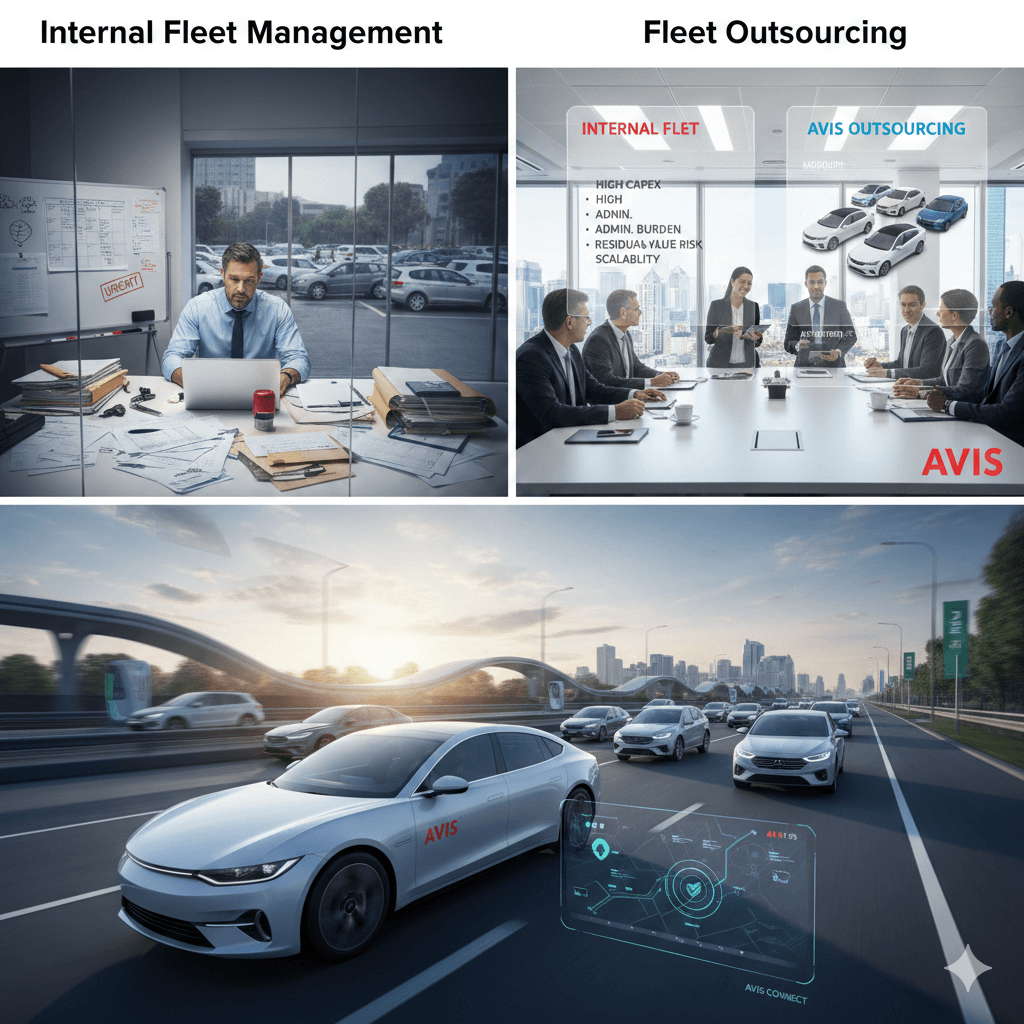
Internal fleet management means that a company:
- Owns or finances the vehicles itself,
- manages servicing, tyre servicing, insurance claims,
- keeps track of MOTs, emissions checks and motorway vignettes,
- handles fines and administration,
- evaluates costs and optimises TCO (Total Cost of Ownership).
Benefits of in-house administration
- Full control over vehicles.
- Flexibility in the choice of service partners.
- Potential for lower costs with a small fleet (up to 5-10 vehicles).
Disadvantages of in-house management
- Hidden costs (staff time, administration).
- Risk of incorrect residual value estimation.
- Higher capital commitment (CAPEX).
- Limited data and analytics.
For mid-sized companies (20-100 vehicles), in-house fleet management often becomes inefficient. One fleet manager is not enough, but a separate department is costly.
What is fleet outsourcing and how does it work
Fleet outsourcing means that an external partner - such as AVIS - takes over complete fleet management. The company retains mobility, but sheds operational responsibilities.
Typically, this involves:
- operating lease or long-term rental,
- a complete service package,
- tyre service and seasonal changing,
- insurance and claims handling,
- replacement vehicles,
- reporting and cost analytics.
The key difference
Internal management = you own the asset and manage the processes.
Outsourcing = you use a service and leave the management to a specialist.
Cost comparison: price is not everything
1. TCO vs monthly payment
Many companies only compare the monthly instalment. This is a mistake.
The internal report includes:
- Depreciation,
- service costs,
- vehicle breakdowns,
- administrative costs,
- residual value downside risk.
Outsourcing brings:
- Fixed monthly price,
- cost predictability,
- transfer of residual value risk to the provider.
In 2026, with the volatile market for driven vehicles and the rapid evolution of EVs, residual value risk is a significant factor.
Staffing and process considerations
Internal model
- Need for an experienced fleet manager,
- monitoring of legislation,
- control of service intervals,
- managing fines and insurance claims.
With 50 vehicles, administration can take 0.5-1 full time.
Outsourcing
- One point of contact,
- Digital reporting,
- automated processes,
- SLA guarantees.
For a medium-sized company, this means saving management time and reducing operational stress.
Cashflow and accounting insight in 2026
Financial management is key today.
Internal fleet management means:
- Tying up capital,
- higher debt or the use of credit lines,
- worsening debt ratios.
Fleet outsourcing:
- Shifts costs to OPEX,
- improves cash flow,
- frees up capital to invest in core business.
For mid-sized companies that are growing or investing in technology, this factor is critical.
Risks that companies often underestimate
1. Vehicle failure risk
Every day without a car = lost productivity.
2. Risk of legislative changes
Changes in taxes, emission standards or support for electromobility can significantly affect the value of vehicles.
3. ESG pressure
Large corporations are increasingly demanding environmental reports from their suppliers as well.
Fleet outsourcing allows more flexibility to switch to hybrid or electric vehicles without capital risk.
Technology and data: a new decision-making factor
In 2026, fleet management is no longer just about cars, but about data.
Outsourcing brings:
- Online reporting,
- cost per km tracking,
- consumption evaluation,
- optimising vehicle utilisation.
The in-house model often works with Excel and manual reporting, which limits strategic decision-making.
When internal fleet management makes sense
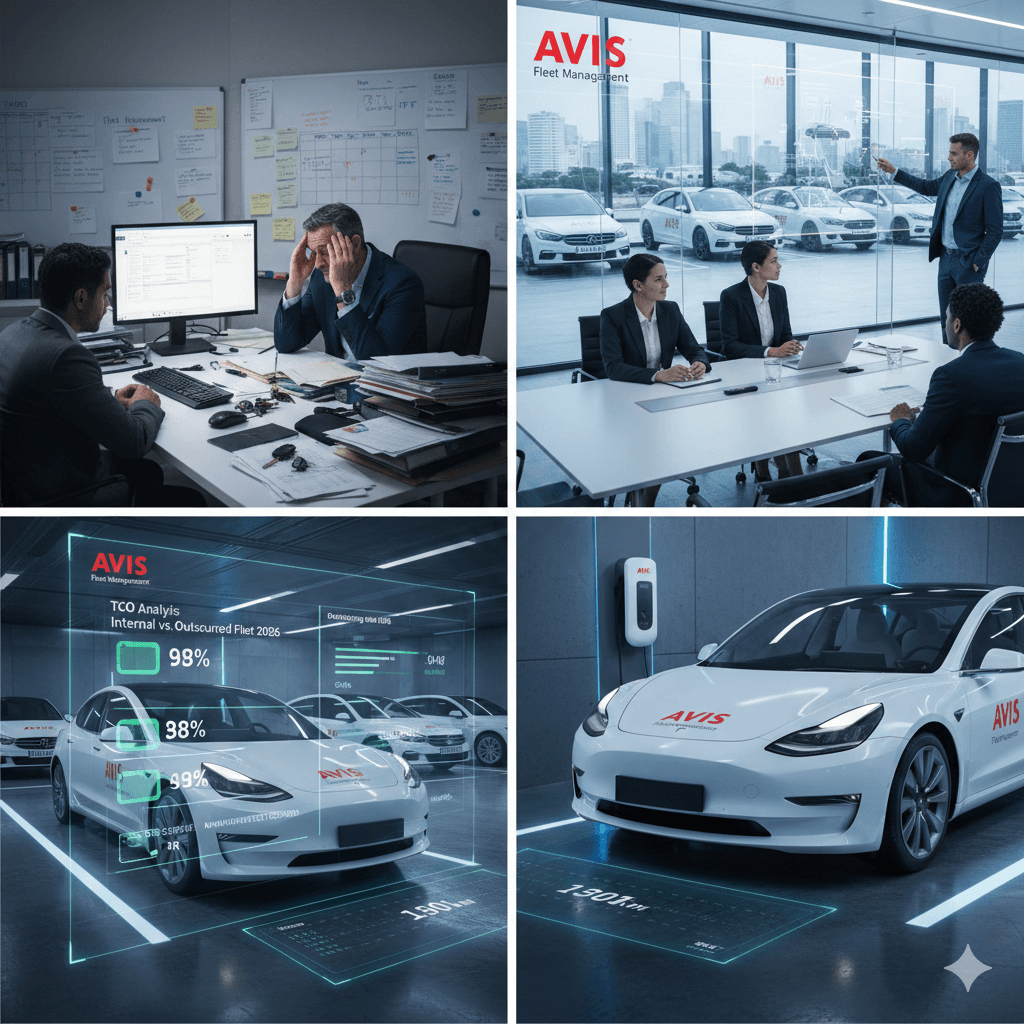
- Small fleet (up to 10 vehicles).
- Strong internal capabilities.
- Specific type of vehicles (e.g. specialized equipment).
- Stable market without significant changes.
When fleet outsourcing is preferable
- 20 or more vehicles.
- Rapid growth of the company.
- Pressure on cashflow.
- Lack of internal capacity.
- Need to flexibly change vehicles.
For most mid-sized companies, outsourcing is more economically and strategically advantageous in 2026.
Strategic view 2026: ownership vs mobility
The biggest change in thinking lies in this:
The question is no longer, "How much does a car cost?"
The question is: "How much does mobility and its management cost us?"
Modern companies understand that vehicles are not an investment, but a tool. And tools are meant to serve the business - not burden it.
Fleet outsourcing makes it possible:
- Scale your fleet as needed,
- optimize cost per km,
- reduce administrative burden,
- transfer risk to the partner.
Conclusion: how to make the right decision
The decision between in-house fleet management and outsourcing should be based on:
- Number of vehicles.
- Staff capacity.
- Financial strategy of the company.
- Willingness to bear market risk.
For medium-sized companies, 2026 is a turning point. Market volatility, technological change and pressure for efficiency make fleet outsourcing a strategic tool, not just an operational solution.
To objectively compare your fleet costs and determine whether outsourcing or in-house management is better for you, contact the experts at AVIS. A transparent TCO analysis will show you the real numbers and help you make a data-driven decision.
Mobility should support your business growth - not hinder it.