
Company fleets and the new EU vehicle depreciation rules (2026)
The year 2026 represents a pivotal moment for CFOs and accountants in managing corporate fleets. The topic of tax, depreciation and EU regulation is moving from the legal framework to strategic financial planning. The EU continues to tighten emissions targets, increasing pressure for transparency in ESG reporting and indirectly motivating Member States to adjust tax instruments in favour of low-emission solutions.
For the corporate fleet, this means one thing: the decision to buy, lease or lease long-term can no longer be made on the basis of purchase price alone. The CFO must consider the impact on cash flow, tax base, balance sheet, residual value risk and future regulatory changes.
In this article, we will detail how the new rules and direction of EU regulations affect vehicle depreciation, what the real tax impact is for companies in Slovakia, and what strategic steps CFOs should consider in 2026.
How vehicle depreciation works in 2026
Basic depreciation rules
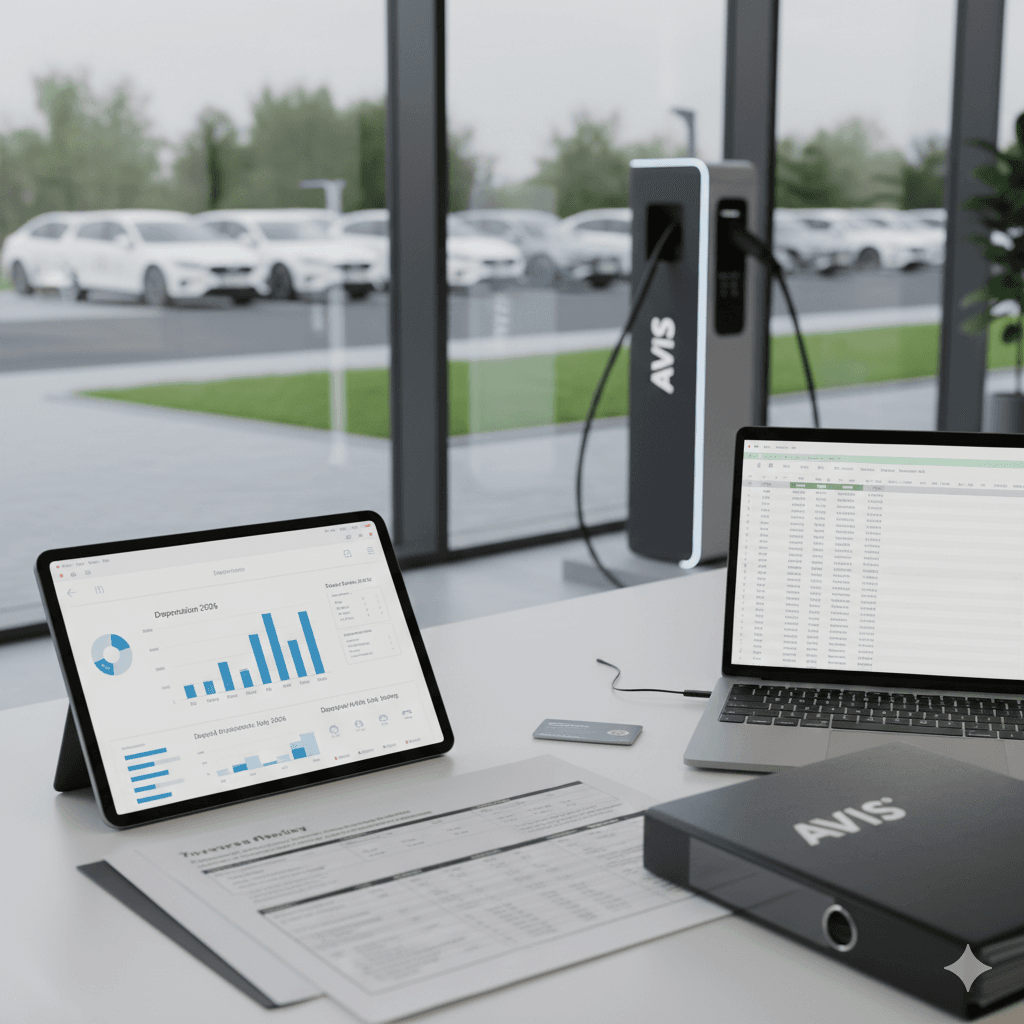
Passenger cars in Slovakia are by default classified in depreciation group 1 with a depreciation period of 4 years. Depreciation represents:
- tax deductible expense
- a tool for spreading the investment over time
- an important factor in planning the tax base
From the CFO's point of view, it is important to set up correctly:
- the entry price of the asset
- depreciation method (straight-line or accelerated)
- timing of entry into service
At higher vehicle prices (especially electric vehicles), depreciation is significantly reflected in the bottom line.
- the entry price of the asset
- depreciation method (straight-line or accelerated)
- timing of entry into service
At higher vehicle prices (especially for electric vehicles), depreciation is significantly reflected in the economic result.
EU regulations and their impact on company fleets
1. Emission targets and the push for zero-emission solutions
EU regulations are moving towards a gradual reduction of internal combustion engines after 2035. Although the EU itself does not directly determine tax depreciation in individual countries, it creates a framework that influences national tax policy.
Implications for companies:
- Increasing pressure for low- and zero-emission vehicles
- the possibility of future emission charges
- increased regulation of the entry of internal combustion vehicles into city centres
Financially, this is a regulatory risk that needs to be factored into long-term fleet planning.
2. ESG reporting and financing
From 2026, ESG reporting is mandatory for a wider range of companies. The vehicle fleet has a direct impact on:
- carbon footprint
- environmental performance
- company reputation
Banks are increasingly taking ESG parameters into account in lending terms. Investing in a low-emission fleet can improve access to finance or reduce the risk premium.
Taxes and their real impact on the fleet
Vehicle tax

Electric vehicles are in many cases exempt or heavily discounted. For larger fleets, this represents a significant saving in fixed costs.
For internal combustion vehicles, the tax may be higher depending on engine power and capacity.
VAT and capital commitment
When buying a vehicle it is important to consider:
- full or limited VAT deductibility
- the impact on capital expenditure (CAPEX)
- impact on debt ratios
Electric vehicles generally have a higher purchase price, which implies a higher capital commitment and a higher amount of depreciation.
Depreciation vs. operating lease
Outright purchase of a vehicle
Advantages:
- asset on balance sheet
- control over sales after depreciation ends
Disadvantages:
- Capital commitment
- risk of decline in residual value
- technological obsolescence
Operating lease or long-term rental
Advantages:
- Payments are a fully tax deductible expense
- the vehicle is not registered as an asset
- transfer of residual value risk
It is important for the CFO to evaluate whether the priority is balance sheet optimization or asset building.
Risks associated with new EU regulations
1. Residual value of internal combustion vehicles
If the push for electrification continues, there may be:
- a decline in demand for running diesel vehicles
- lower selling price after depreciation
- the need to make provisions
This increases the risk in a direct ownership model.
2. Technological obsolescence of electric vehicles
Battery and range development is progressing rapidly. A vehicle bought today may have significantly worse performance than new models in 3 years time.
For the accountant, this means the risk of a difference between book value and market value.
CFO's strategic view for 2026
1. Scenario planning
Include in financial models:
- Energy price development
- potential emission charges
- future tightening of EU regulations
Don't just calculate current taxes, but a 4-6 year outlook.
2. Fleet segmentation
An effective solution is often not "all or nothing". Recommended:
- urban vehicles → electric vehicles
- regional routes → hybrids
- specific use → individual TCO assessment
3. Optimisation of depreciation policy
Consider:
- Straight-line vs. accelerated depreciation
- timing of purchases to the end of the accounting period
- combination of ownership and leasing
Properly set depreciation can significantly impact your tax basis.
Conclusion
Corporate fleets in 2026 are no longer just a logistical issue. Taxes, depreciation and EU regulations are becoming key factors in financial management. For CFOs and accountants, it is essential to evaluate the fleet holistically - in terms of tax impact, capital commitment, ESG requirements and technological developments.
The right strategy - combining ownership and operational financing - allows to minimize risks, optimize cash flow and prepare the company for further tightening of EU regulations.
If you are planning a fleet renewal in 2026, we recommend a detailed financial analysis, including modelling of depreciation, tax implications and regulatory scenarios.