
Advantages and disadvantages of operating lease for sole traders
Advantages and disadvantages of operating lease for sole traders
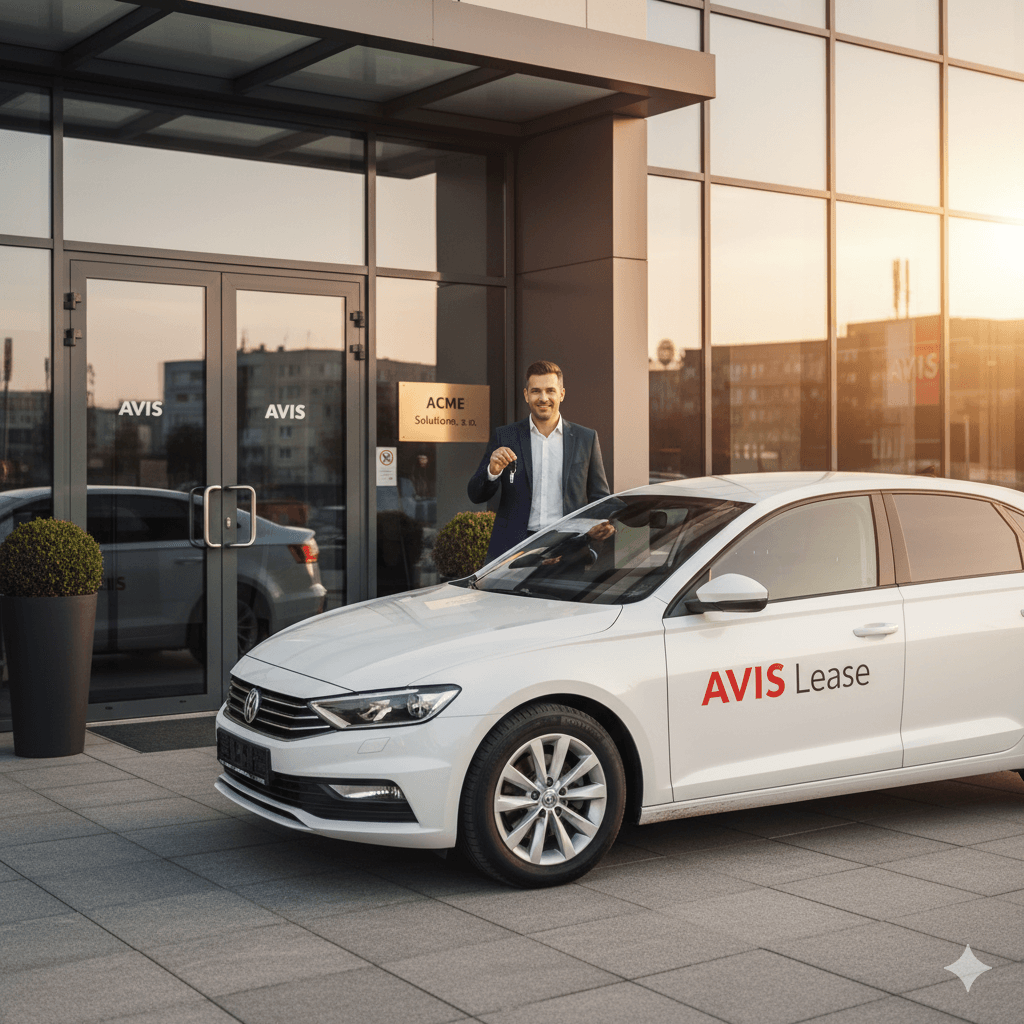
Operating leases are becoming an increasingly popular form of vehicle financing among sole traders and small businesses. It allows you to drive a new car without having to buy it, with all services included in the monthly payment. In this article, we look at what the main benefits are, the potential pitfalls and who this model is best suited for. We'll help you understand how operating leases can optimise your business costs.
What is an operating lease and how does it work
An operating lease is a form of long-term vehicle rental where the lessee pays a monthly fee for the use of the car, but never owns the vehicle. At the end of the contract, the car is simply returned and the business can choose a new one.
Basic features of an operating lease:
- the vehicle is not owned by the CSR,
- all servicing and insurance services are included in the monthly payment,
- fixed costs throughout the period,
- no need to deal with the sale of the old car.
Who is it for:
- Sole traders who need a reliable, worry-free car,
- small businesses with 1-10 vehicles,
- entrepreneurs who prefer financial flexibility and cost planning.
Advantages of operating lease for self-employed
1. Predictable costs and better cash flow
Monthly payment includes servicing, insurance, tyre service, vignette or roadside assistance. So the sole trader knows exactly how much he or she will pay each month - without unexpected expenses.
2. Tax optimisation
Lease payments can be included in the tax expense and VAT can be deducted from the monthly payment according to the vehicle use rules. From 2026 onwards, only 50% of the VAT deduction will be available for mixed use - leasing therefore remains a favourable tool for self-employed persons who primarily use the vehicle for business.
3. No worries about maintenance and sales
AVIS will provide full servicing, insurance and tyre replacement. At the end of the contract, the vehicle is simply returned - no need to find a buyer or deal with residual values.
4. Contract flexibility
Choice of lease length (3-24 months) and annual mileage limit. If needs change, the contract can be extended, shortened or renewed with another vehicle.
5. Representative fleet
New vehicles with no risk of wear and tear appear professional in front of clients and business partners. For many tradesmen, this is a significant image benefit.
Disadvantages and potential pitfalls of operating leases
1. The vehicle is not owned
At the end of the contract, the car does not become the property of the entrepreneur - if he wants to continue using it, he must enter into a new contract.
2. Mileage limitations and contract terms
The contract usually contains a mileage limit (e.g. 15,000-30,000 km per year). Exceeding it is usually subject to a charge, which may increase the overall cost.
3. Obligation to return the vehicle in good condition
Before handover, the vehicle is assessed for wear and tear according to the leasing company's standards. Excessive damage may result in additional charges.
4. Less flexibility for early termination
Operating lease contracts are generally for a fixed term. Early termination is possible, but often with a fee or a charge for the difference.
Comparison.
| Criterion | Operating lease | Purchase on credit |
|---|---|---|
| Ownership | You do not own the vehicle | Yes, after repayment |
| Service and insurance | Included in the repayment | Paid separately |
| Cost predictability | High | Low |
| Administration | Minimal | Higher |
| Company image | New vehicle every few years | Older fleet |
| Tax costs | Deductible monthly payments | Depreciation of assets |
Trends in operating leases for the self-employed (2025)
- Growing demand for electric vehicles - government subsidies and lower operating costs increase their attractiveness.
- Digitisation of the process - online contract signing, vehicle selection on the web, home delivery.
- Short-term operating leasing - flexible leases from 3 to 24 months via AVIS MaxiRent.
- Fleet-sharing solutions - small companies use shared fleets within co-working spaces or business centres.
Advice on how to make the most of operating leases
- Choose the right mileage limit - take real needs into account.
- Compare multiple offers (AVIS Lease, AVIS MaxiRent).
- Keep an eye on legislation - VAT rules are changing from 2026.
- Take advantage of regular service inspections to avoid repossession charges.
Frequently asked questions (FAQ)
1. Can a self-employed person deduct VAT on an operating lease?
Yes, depending on how the vehicle is used. For mixed use, the deduction will be limited to 50% from 1 January 2026.
2. What happens at the end of the lease?
The vehicle is simply returned. You can choose a new one, take out a new contract or switch to another model.
3. Is it possible to end the contract early?
Yes, but with a fee according to the terms and conditions. Some AVIS products offer more flexible solutions.
4. What documents does a sole trader need to conclude a lease?
A trade license, ID card and a tax-free certificate or bank statement are sufficient.
5. Which type of lease is the most advantageous for the self-employed?
It depends on the type of business - AVIS MaxiRent is ideal for flexible sole traders, AVIS Lease is ideal for stable use.

Summary / TL;DR
- Operating leases save time, worry and improve cashflow.
- The sole trader does not own the vehicle, but only pays for use.
- All costs are fixed and predictable.
- VAT deduction rules are changing from 2026 - advisable to address upfront.
- AVIS offers a wide portfolio of solutions for both the self-employed and small businesses.
Keywords and entities used
Main KW: operating lease, sole trader, leasing benefits, business, costs, AVIS.
Related entities: AVIS Lease, AVIS MaxiRent, Payless GigaRent, VAT 2026, automotive market SR, leasing contract, cashflow, electric vehicles, fleet management.
Conclusion
If you are a sole trader or a small business owner, an operating lease from AVIS allows you to drive worry-free and optimise your business costs. Choose a vehicle to suit your needs and take advantage of professional solutions for entrepreneurs.
👉 Visit avismaxirent.sk or contact our team for an individual quote.