
AI predictive fleet servicing: How to reduce vehicle downtime by tens of percent
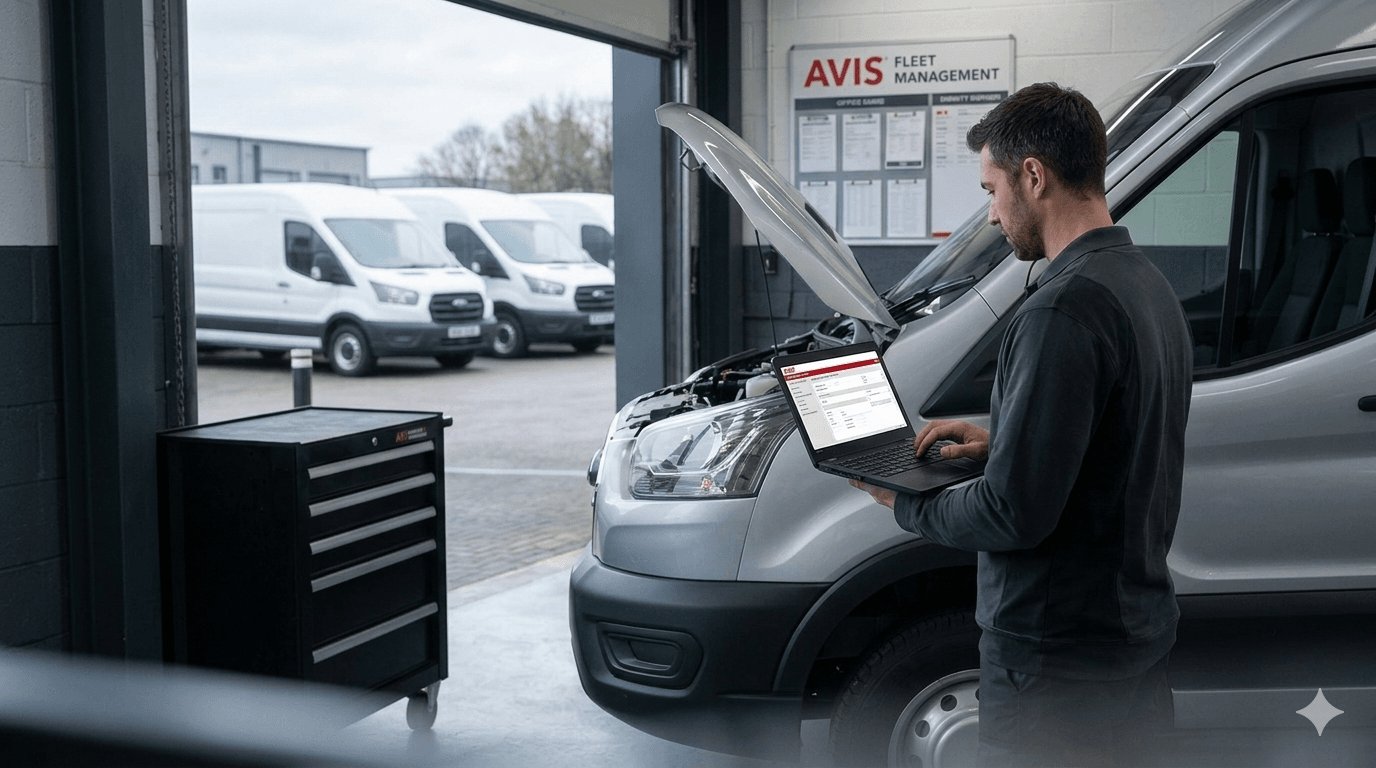
For logistics companies, service organisations or businesses with larger fleets of vehicles, downtime - the time when a vehicle is not running - is one of the biggest hidden costs. Unplanned breakdowns can cause delayed deliveries, loss of service, replacement vehicle costs and ultimately customer dissatisfaction.
In recent years, however, a technology trend has emerged in fleet management that can significantly reduce these risks: AI predictive fleet maintenance. By combining telematics, data analytics and artificial intelligence, modern systems can predict breakdowns before they happen.
Instead of the traditional "service only when something goes wrong" model or fixed service intervals, companies are moving to a "service exactly when it's needed" model .
The result:
- less unplanned vehicle downtime
- lower service costs
- higher fleet availability
- better operations planning
How exactly does AI fleet service work, what role does telematics play in it and what specific benefits does it bring to fleet managers and logistics companies? Let's take a closer look.
What is AI predictive fleet maintenance

Predictive maintenance is an advanced method of vehicle management that uses artificial intelligence, sensors and telematics data to predict future breakdowns.
Unlike the traditional service model, it works on the principle of continuous vehicle monitoring.
AI systems analyse, for example:
- engine temperature
- component vibrations
- battery status
- fuel consumption
- the driver's driving style
- number of cold starts
- operating load
This data is then compared with historical data from thousands of similar vehicles. Based on this, the system can assess the likelihood of a specific component failure.
For example, if an increased risk of alternator or brake system failure is detected, the fleet manager will receive an alert before an actual failure occurs.
How telematics works in fleet management
Vehicle telematics is a key element of predictive service.
The telematics device is typically connected to the vehicle's OBD or CAN system and collects real-time technical data.
This data is then transmitted to a cloud platform where it is analysed by an AI algorithm.
The most commonly monitored parameters include:
Technical condition of the vehicle
For example, the system monitors:
- Tyre pressure
- battery condition
- engine oil temperature
- brake wear
This enables the workshop to identify potential problems before they affect operations.
Driver behaviour
AI fleet systems also analyse the driving habits of drivers, for example:
- rapid acceleration
- hard braking
- driving with high engine loads
Such behaviour can significantly accelerate vehicle wear and tear.
Operational use of the vehicle
The algorithms evaluate:
- average daily mileage
- city vs. highway driving
- operation in extreme conditions
This makes it possible to optimize service intervals according to the real use of the vehicle.
How much a company can save with predictive service
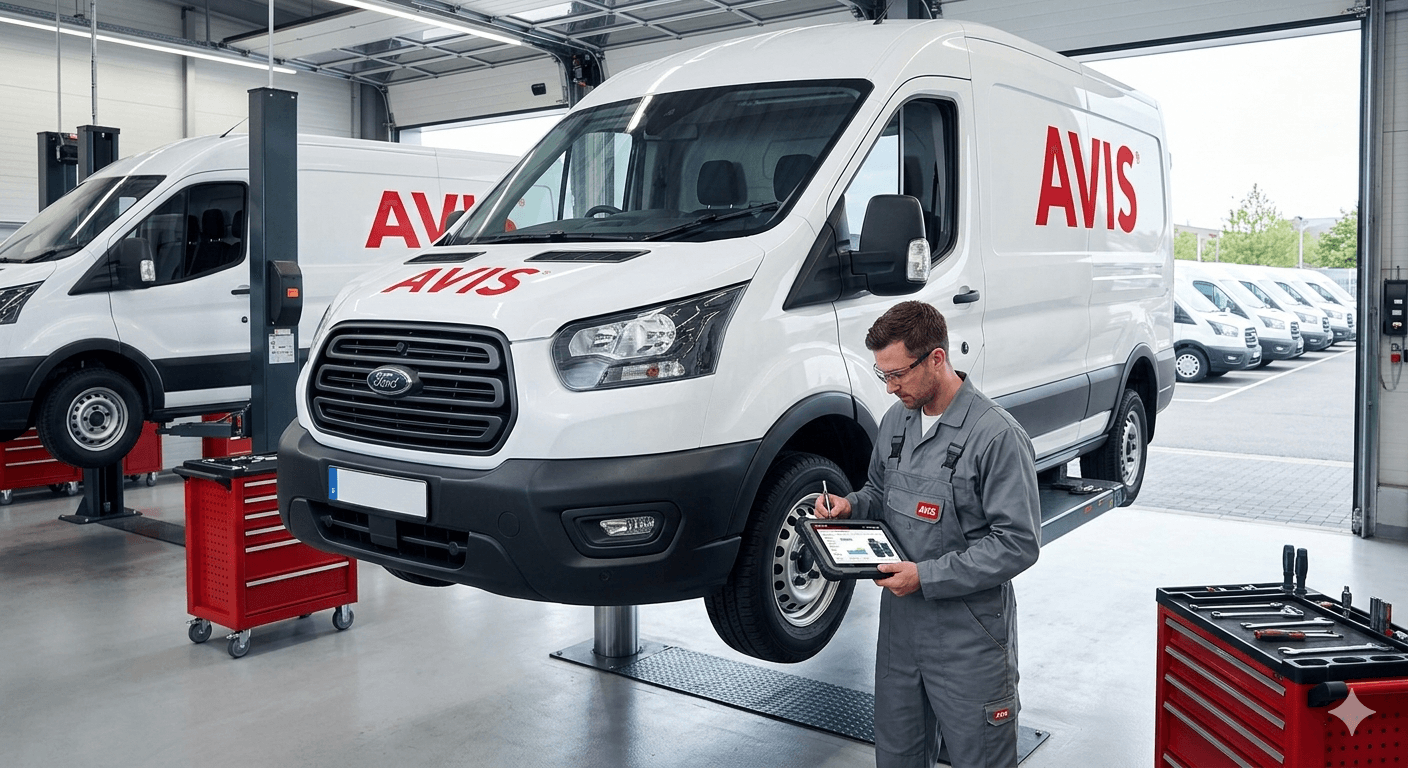
According to several fleet analytics studies, implementing AI predictive maintenance can bring significant reductions in operating costs.
Typical results include:
- 30-50% reduction in vehicle downtime
- 10-25% reduction in service costs
- 20% increase in component lifetime
It is in the elimination of unplanned failures that the greatest savings are realized.
For example, if a van breaks down during distribution, the company has to deal with:
- towing the vehicle
- replacement logistics
- replacement vehicle
- delivery delays
Predictive service makes it possible to eliminate these situations.
Why downtime is the most expensive problem for fleets
For fleet managers, it is not the vehicle service itself that is the problem, it is the unplanned downtime.
For delivery and logistics fleets, one day of vehicle downtime can mean:
- loss of revenue
- the cost of a replacement vehicle
- reorganisation of routes
- administrative costs
For a fleet of 100 vehicles, each percent of downtime can represent thousands of euros per year.
AI fleet systems are therefore playing an increasingly important role in modern fleet management.
How AI is changing the fleet manager's job
The modern fleet manager is no longer just a fleet administrator.
Thanks to telematics data, his role is shifting towards strategic mobility management.
AI platforms enable, for example:
- plan service ahead
- optimise vehicle utilisation
- analyse the TCO of individual models
- identify vehicles with excessive wear and tear
The result is a more efficient and predictable fleet operation.
Trends in fleet technology to 2030
Technology in fleet management is evolving rapidly.
Major trends include:
AI integration with vehicles directly from manufacturers
Modern vehicles already contain dozens of sensors and communicate directly with cloud platforms.
Automated service orders
An AI system can automatically book a service appointment before a breakdown.
Predictive service for electric vehicles
For electric fleets, AI will monitor, for example:
- battery degradation
- charging cycles
- thermal management
Why companies are increasingly investing in smart fleet solutions
Rising vehicle prices, service costs and driver shortages are forcing companies to optimize every part of their operations.
Predictive fleet maintenance brings three major benefits:
- Higher vehicle availability
- lower service costs
- better visibility of fleet operations
This is why AI fleet technologies are becoming the standard, especially in logistics, distribution and services with high vehicle utilization.
CALL TO ACTION
Effective fleet management today means working with data. AI predictive maintenance and telematics enable companies to accurately track vehicle status, prevent breakdowns and significantly reduce downtime.
For fleet managers and logistics companies, this means higher operational reliability, better planning and lower costs.
Companies that can implement these technologies correctly gain a significant competitive advantage - especially at a time when mobility, vehicle availability and fleet efficiency determine the success of the entire business.
TL;DR
- AI predictive maintenance uses telematics and data analytics to predict vehicle failures
- enables vehicles to be serviced before a problem arises
- reduces fleet downtime by 30-50%
- optimises service costs and extends vehicle lifetime
- is becoming a key technology in modern fleet management
FAQ
How does predictive vehicle maintenance work?
Predictive maintenance uses telematics and artificial intelligence to analyze vehicle data. Based on this data, it can predict potential failures before they occur.
What is telematics in a fleet of vehicles?
Telematics is a technology that collects and transmits data about the operation of a vehicle - such as roadworthiness, driving style or fuel consumption.
How much can a company save with AI fleet solutions?
Companies can reduce fleet downtime by 30-50% and service costs by around 10-25%, depending on the size of the fleet and how it is used.
Who benefits most from predictive fleet servicing?
Logistics companies, distribution companies and businesses with a large number of vehicles in daily operation benefit the most.
Is predictive maintenance also suitable for smaller fleets?
Yes. Smaller fleets can also benefit from better service planning, lower risk of breakdowns and optimised vehicle operating costs.